
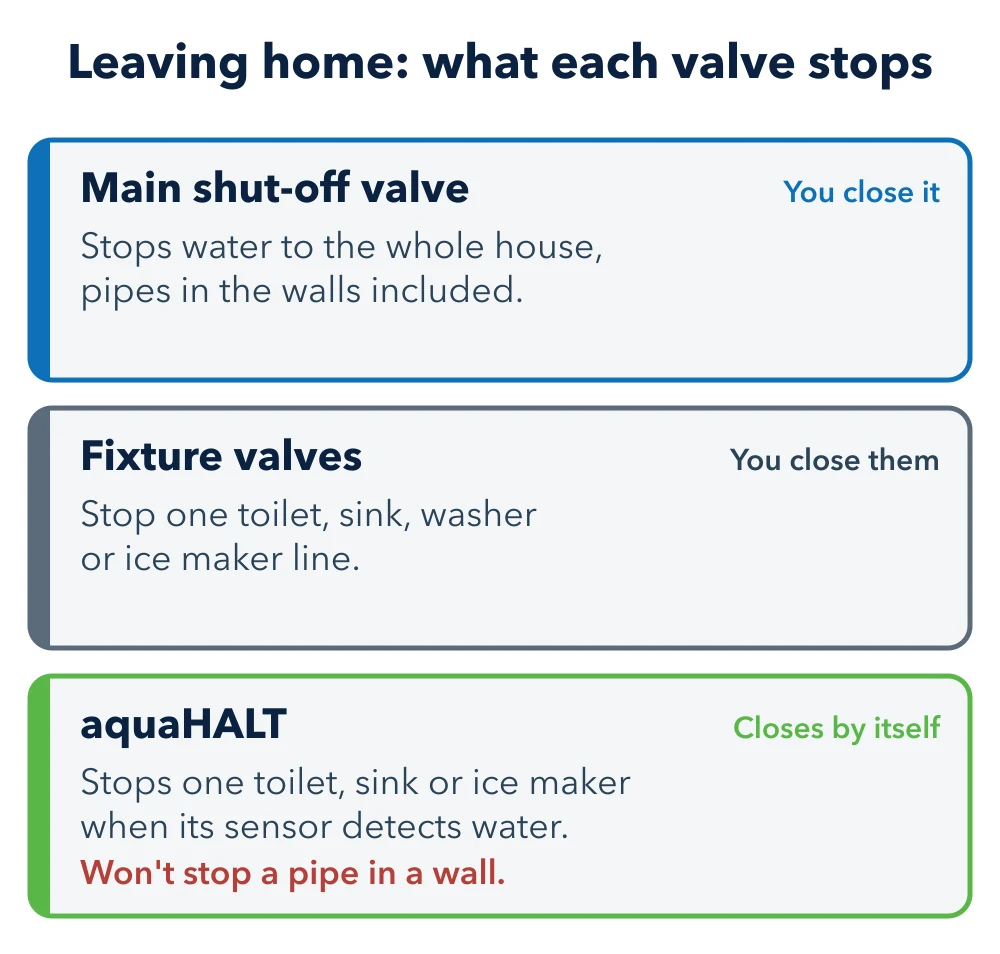
Yes, if nothing in the house needs water while you’re gone: close the main water valve before you leave. If a supply hose splits or a pipe bursts while the house is empty, nobody’s there to shut it off, and with the main closed there’s no steady supply behind the leak.
Travelers, the insurer, suggests shutting off the main if you’ll be away for a long stretch, after checking with a professional. If you can’t, it suggests at least closing the valves to individual appliances and fixtures, such as the washing machine and toilets.
Closing the main has a cost, though: everything that runs on the house supply stops too. Here’s what to check before you close it, what changes in winter, and what to do when some of the water has to stay on.
At home, someone hears the toilet running or sees water on the floor. In an empty house, a leak can run until someone comes back. A crack as small as 1/8 inch in a pipe can spray more than 250 gallons of water a day, according to Emerson, a technology and engineering company, as reported by the National Association of Realtors. Water doesn’t stay where it starts, either: Travelers points out that a leak on an upper floor damages the floors below.
Everything after the valve: every faucet and toilet, the washing machine, the fridge’s ice maker and water dispenser, and any sprinklers or drip irrigation that run off the house supply. Three things to sort out before you close it:
Our winter plumbing guide covers the cold-weather risks region by region.
Sometimes closing the main isn’t an option: a house-sitter is staying, the irrigation has to run, or the fire sprinklers are on the main. Travelers’ fallback is to close the valves to the major appliances and fixtures you won’t need.
For the fixtures you leave on, a device that shuts the water off by itself does the job a person would. EPA’s WaterSense guide to leak detection devices says a shut-off feature “may be helpful for a vacation home that does not have regular occupancy”. A sensor that only sends an alert still needs someone nearby to act on it, which is why Travelers says to have a neighbor or friend on call if you rely on one.
Renting out a vacation home between your own stays? Our guide to short-term rental water leak prevention covers the turnover check and the empty nights between guests.
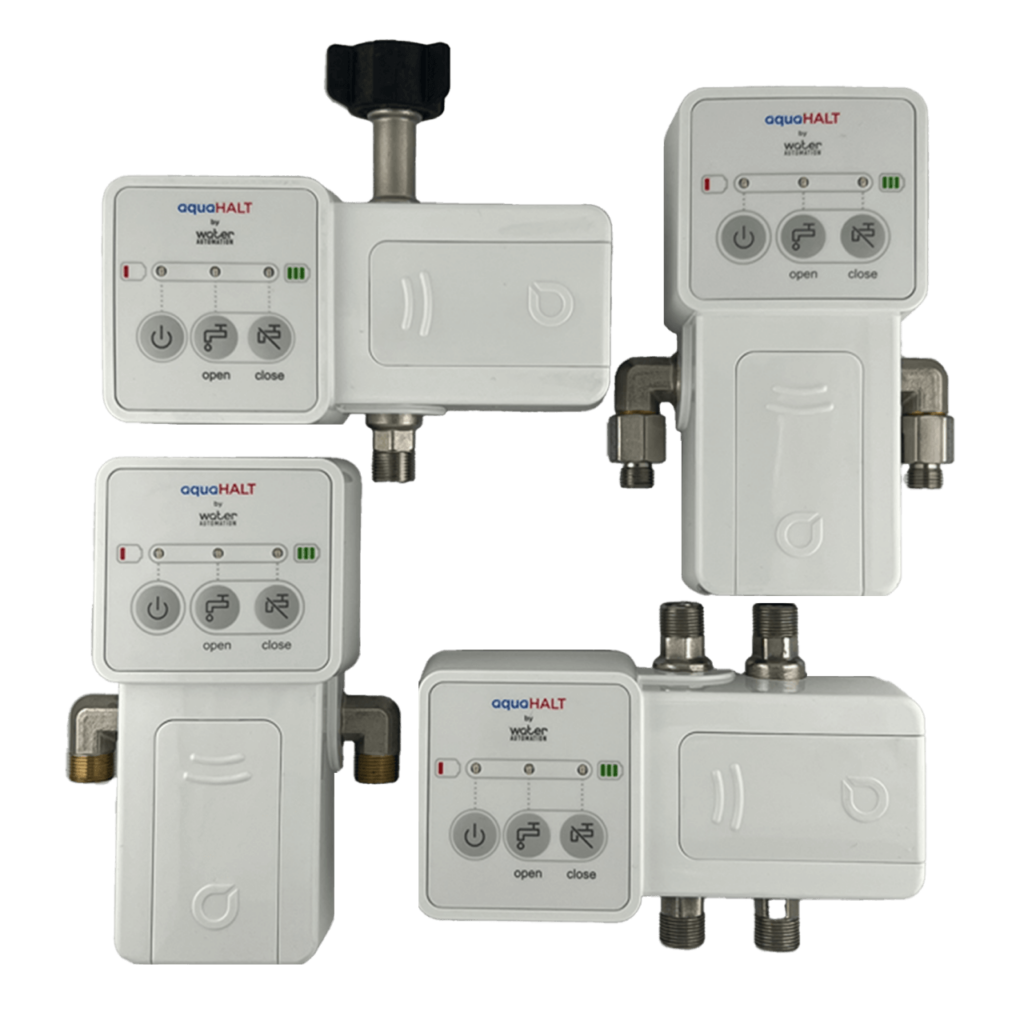
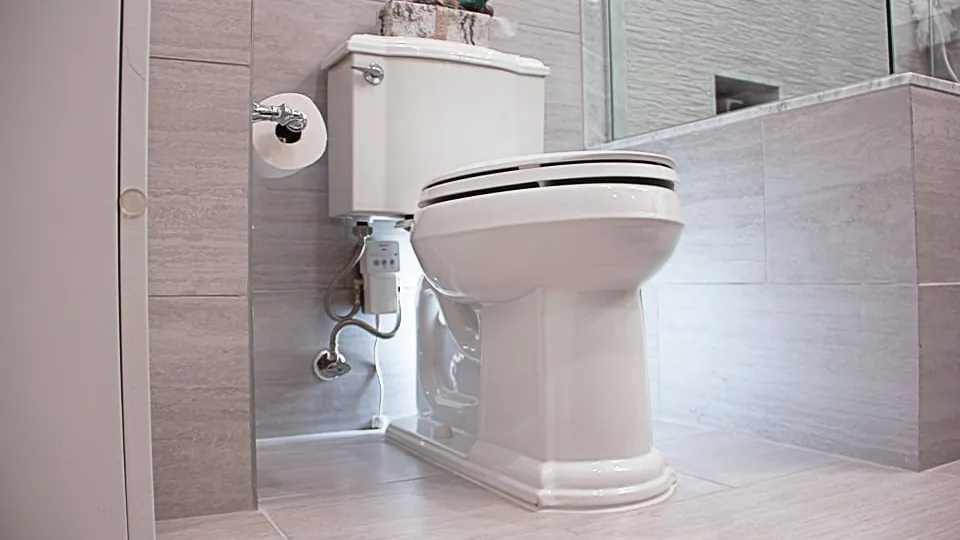
aquaHALT is an automatic shut-off valve for one fixture: the 2X or Flip for a toilet, the ICE for an ice maker line and the H/C for a sink. When its sensor detects water, it shuts off the water to that fixture, even with nobody home. On the 2X, Flip and ICE, the water stays off until someone dries the sensor and presses “open”.
What it won’t do:
So if nothing in the house needs water while you’re gone, closing the main covers more than aquaHALT can. aquaHALT covers the toilets, sinks and ice maker you leave on, and it’s there on the trips when nobody closes anything. Each fixture needs its own unit. See the aquaHALT models and prices.
Open the main again, then take a quick walk around before you unpack: under the sinks, behind the toilets and the fridge, around the water heater, and the ceilings under the bathrooms. If an aquaHALT unit has closed, find where the water came from before you turn that fixture’s water back on. If you find a burst pipe, here’s what to do first, step by step.
If you’re leaving the main on, yes. Travelers lists the toilets among the valves to close. Each toilet’s valve is usually on the wall next to it.
Travelers suggests it for a long trip and says to consult a professional before you shut it off. Check first whether your fire sprinklers are fed from the main, whether irrigation needs to run, and what your water heater’s manual says.
With the main open, water keeps coming until a valve is closed, and Emerson says a 1/8-inch crack can spray more than 250 gallons a day. With the main closed, only the water already in the house’s pipes and tanks can escape.
There’s no set number of days. Travelers’ advice on the main is for when you’ll be away for a long stretch, but it also says to be especially careful when you leave the property, even for only a few days.