
Why is my water bill so high? If it jumped and your habits didn’t change, the likeliest cause is a leak, and a toilet that keeps running is one of the most common. Start with a meter test: turn off every tap and water-using appliance, read your water meter, wait two hours without using any water, and read it again. If the reading changed, water is going somewhere (EPA WaterSense).
Small leaks add up. The EPA estimates that the average household’s leaks can waste more than 9,300 gallons of water a year, and that nine percent of homes have leaks wasting 50 gallons or more every day.
Before you hunt for leaks, check what changed on paper:
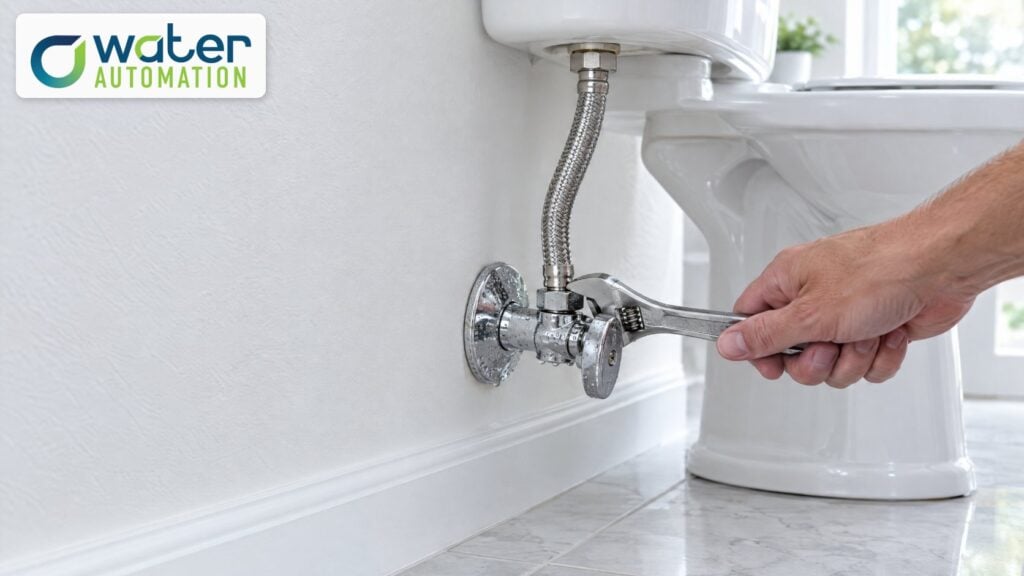
A toilet that runs between flushes, refills on its own (a “phantom flush”) or has a worn flapper can waste a lot of water without ever making a puddle. The EPA’s test: put a few drops of food coloring in the tank, wait 10 minutes without flushing, and look for color in the bowl. More in our guides to how to tell if your toilet is leaking and whether a running toilet raises your water bill.
A faucet that drips once a second can waste more than 3,000 gallons a year, according to the EPA. Worn washers and cartridges are cheap to replace.
Sprinkler systems can cause big jumps: a broken head, a cracked line underground, or a timer that reset itself after a power outage. Walk each zone while it runs. Summer heat, a new lawn or filling a pool will show up on the bill too.
If the meter test shows a leak but nothing inside is running, the leak may be underground between the meter and the house, or under a slab. Close your home’s main shut-off valve and watch the meter: if it still moves, the leak is on the line outside the house. If it stops, check for leaks indoors: the toilets, the sinks, then the walls and ceilings.
A softener that regenerates too often, or gets stuck mid-cycle, can keep sending water down the drain. Listen for running water near the unit and check its settings.
A relief valve that drips into a drain line, or a leaking tank, wastes water you may never notice. Check the discharge pipe and the floor around the tank.
Guests over the holidays, kids home for the summer, a new washing machine or dishwasher, longer showers in winter. Ordinary changes like these can move the bill.
If your usage is flat but the bill went up, it’s the price. Check the rate notice that came with a recent bill, or the utility’s website. In some cities the sewer charge is based on winter water use, so a leak in winter can cost you more than the water itself.
Meters can be misread, and they can fail. If your own readings don’t match the bill, ask the utility to re-read or test the meter. If your utility has digital meters, ask whether you can see your daily use online, which makes a leak easy to spot.
If the two-hour meter test shows no movement at all, look at the billing side: an estimated read, a longer billing period, a rate change, a tier threshold or sewer charges. Call the utility and ask for your usage history by month.
The usual reasons are faucets left dripping to keep pipes from freezing, holiday guests, longer showers, a toilet that started running, or a leak from a pipe that froze. If a frozen pipe has split, close the main first, then work through what to do after a pipe bursts.
Some buildings have one meter and split the bill between units by a formula, so your charge can rise because of a leak in someone else’s unit. Report running toilets and drips to management, and ask how water is billed.
Common household leaks are often easy to fix: a flapper, a fill valve, a faucet washer. Those leaks run quietly into the bowl or the drain, and no floor sensor will catch them, so the meter and dye tests are how you find them.
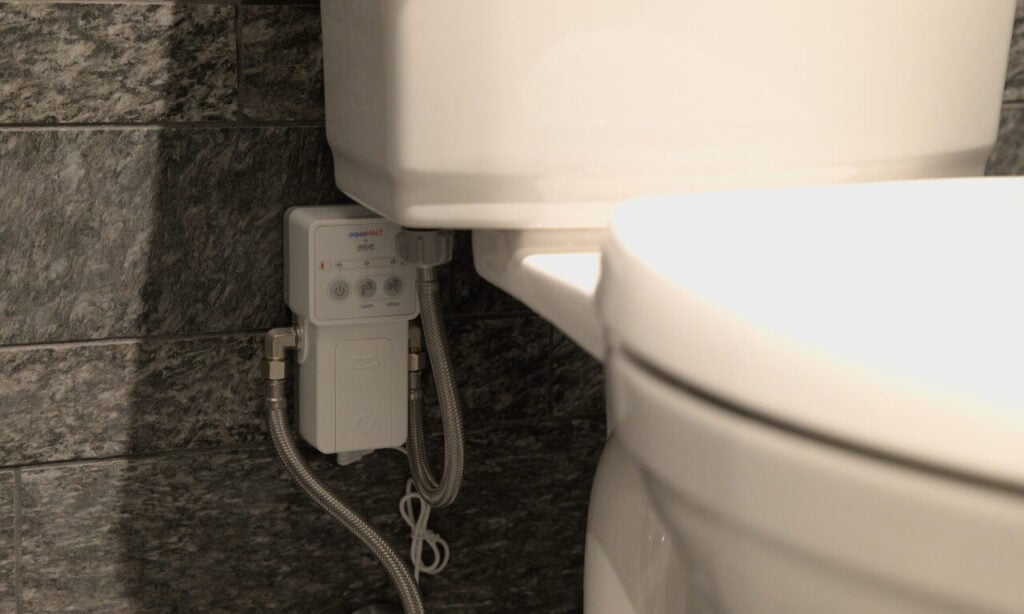
The leaks that flood a floor are a different problem: a split toilet supply line, a failed sink hose, a broken ice maker line. When that water reaches aquaHALT’s floor sensor, it closes its valve on that fixture, so a failure past the valve doesn’t keep running until someone notices. A failure in the hose carrying water to aquaHALT from the wall valve isn’t covered, because that hose is on the supply side of its valve. On a toilet or ice maker, it also beeps. Every aquaHALT runs on batteries, without Wi-Fi or an app. Pick the model you need.
Turn off all the water, read the meter, wait two hours and read it again. Any change probably means a leak. Then dye-test your toilets.
Yes. A toilet that keeps running sends water down the drain around the clock, often without a sound you’d notice. See how much water a running toilet uses.
Something is using water on its own: a leak, a running toilet, irrigation on a timer or a water softener cycle. A meter test will confirm it.
Your water utility for billing, meter readings and usage history. A plumber for leaks you can’t find or fix yourself.