

Short-term rental water leak prevention has to cover the gaps: after check-out, before the cleaner arrives, and the nights nobody’s booked. A good plan pairs a turnover check for slow leaks with a device that closes the water by itself at each fixture you choose to cover. Then guests and cleaners need to know what to do when that device beeps.
This is general information for hosts, not legal or insurance advice. Your platform, your insurer and your local authority can tell you what they require.
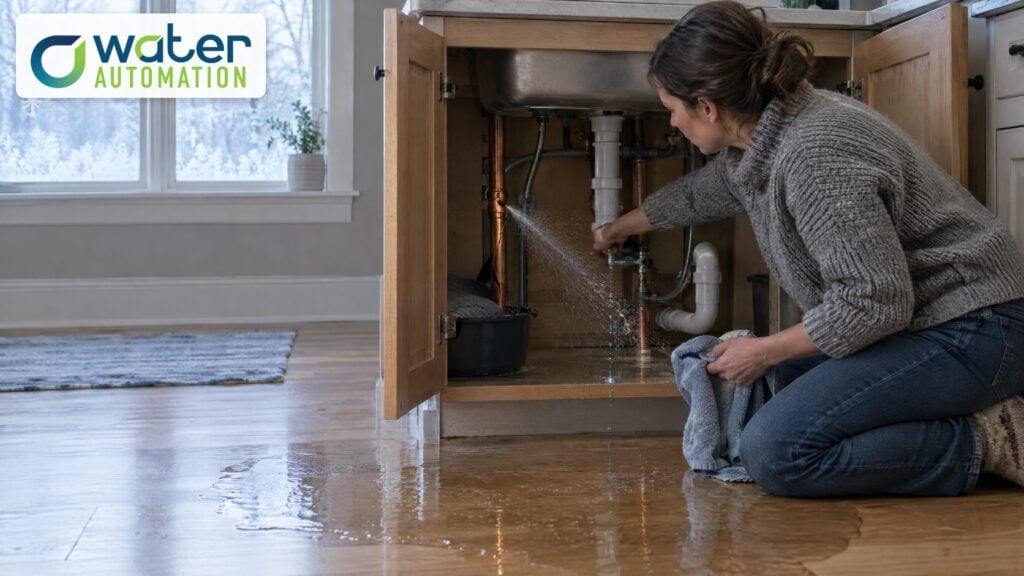
When the home is occupied, there’s someone to see water on the floor or hear the toilet running. Between guests, there’s nobody there to notice. A toilet supply line that lets go after the last guest leaves keeps running until someone walks in and closes the valve.
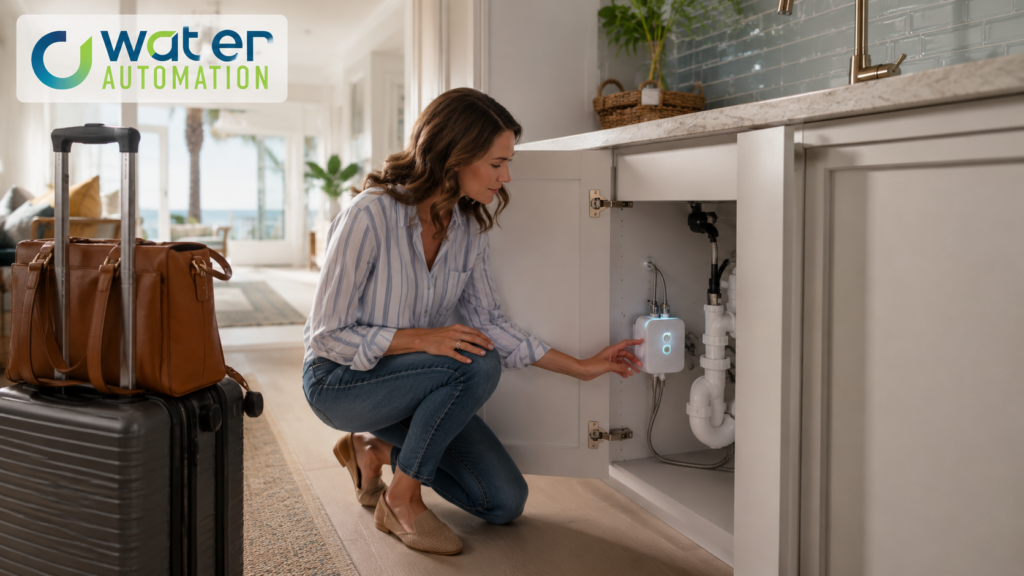
That’s also why a device that only sends a warning to your phone isn’t the whole answer for a rental. A warning still needs someone nearby with a key who knows where the valve is. A plan for the empty days has to work when nobody responds at all.
The cleaner or host who turns the unit over is the only person who sees it regularly. Give them a short written list, and keep it the same every time so a change stands out.
Keep an eye on the water bill between bookings, too. A bill that jumps with no change in bookings is a reason to look.
The turnover check finds slow problems. It can’t do anything about a leak that starts the night after the cleaner leaves. An automatic shut-off valve at the fixture can, if the water reaches its sensor. EPA’s WaterSense guide to leak detection devices says a shut-off feature “may be helpful for a vacation home that does not have regular occupancy”, which describes a rental between bookings.
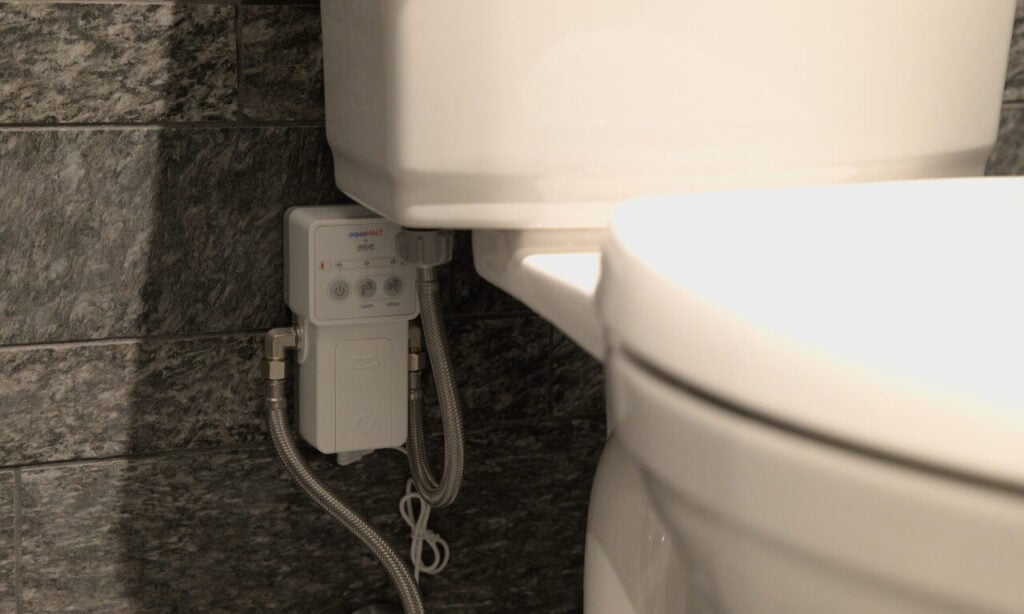
The aquaHALT 2X automatic toilet shut-off valve sits on the toilet supply line, between the wall valve and the tank. Its sensor is wired to the unit and sits at the base of the toilet or on the wall behind it, touching the floor. When water reaches the sensor, the 2X closes off the tank’s water and beeps. It does that on its own, with nobody there to respond.
For a rental, these details count for more than they would in a family home:
Nobody is told remotely. The beep happens at the device, and there’s no app or message. If it closes the water on an empty night, the first person to find out is whoever walks in next. Make “check the toilets” part of every turnover and every guest’s arrival notes, so a closed valve is found early.
The beep means water or batteries. The 2X manual gives water at the sensor and low batteries the same sound. The blinking lights on the device step down from full power, to a reminder to change the batteries, to low power. At the low-power stage, the 2X manual says the device will turn off. Add those lights to the turnover list, and change the batteries at the reminder stage, not later.
Flat batteries are an open question. The manuals don’t say where the valve sits when the batteries are completely flat. For a long gap between bookings, close the wall valve behind each toilet as well and note it in the house manual, so the next cleaner knows to open it.
The new supply hose isn’t covered. Fitting the 2X means adding a hose on the wall side of the unit, and that hose sits upstream of the 2X’s own valve. If it leaks, the 2X can close and beep while water keeps coming, so someone still has to shut the wall valve by hand.
Put this in the house manual, near the Wi-Fi details where people actually look.
For guests: “If the aquaHALT box by the toilet starts beeping, check the floor around the toilet. Press the button marked ‘close’ to silence it, then message us. If the floor is dry, press ‘open’ so the toilet refills, and tell us so we can check the batteries. Please don’t press ‘open’ while the floor is wet.”
For cleaners: the manual’s own way to test the sensor is to put some water on the floor under it, so mopping that reaches the sensor can close the valve the same way. After cleaning a bathroom, dry around the sensor, make sure the toilet still refills, and press “open” if it doesn’t. Check that the sensor still touches the floor, because the manual says it must touch the flooring to detect water.
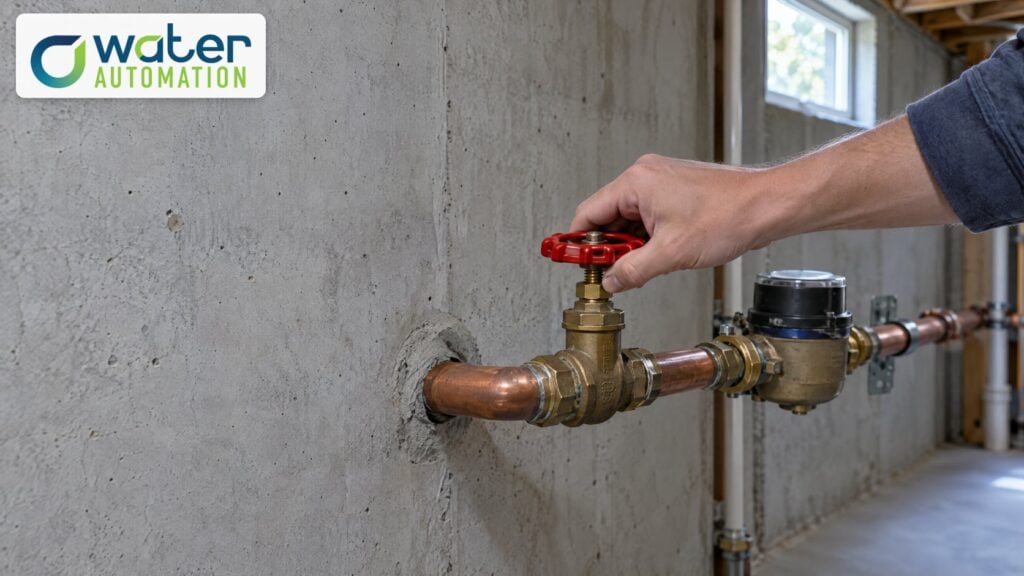
For whoever’s on call: if the device has closed, find the water first. aquaHALT has closed the supply to the toilet, but it hasn’t repaired anything. Look at the supply line and the tank, and get any leak fixed before you turn the water back on. Then dry the sensor completely, press “open” and watch the tank refill. If water keeps coming after aquaHALT has closed, the leak is before the device: close the wall valve, or the main if that doesn’t stop it, and call a plumber.
If the wall valve by the toilet shuts off fully, it’s a hand-tool job: the 2X goes between that valve and the toilet’s existing supply hose. The manual lists a small adjustable wrench and a small level, and neither comes in the box. The level is for working out where water would run if the toilet leaked, so the sensor goes where it’ll get wet.
The first step in the manual is closing the wall valve and making sure no water passes through it. If water still flows with the valve closed, the manual says to contact a plumber to replace the wall valve before installing. The full steps are in the aquaHALT 2X manual.
If a toilet in the unit doesn’t have one yet, fit an aquaHALT 2X before the next guest checks in.
automatic water shutoff for vacation homes works best when the decision begins with observed conditions rather than assumptions. Owners often see a symptom and jump directly to a product, repair
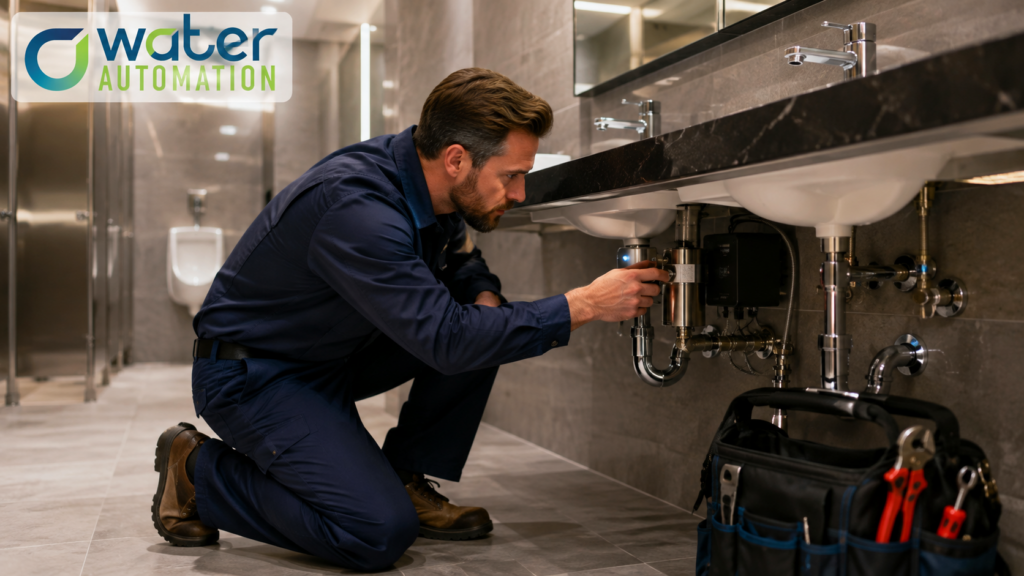
commercial restroom leak detection works best when the decision begins with observed conditions rather than assumptions. Owners often see a symptom and jump directly to a product, repair or proposal.