

How to Turn Off the Main Water to Your House
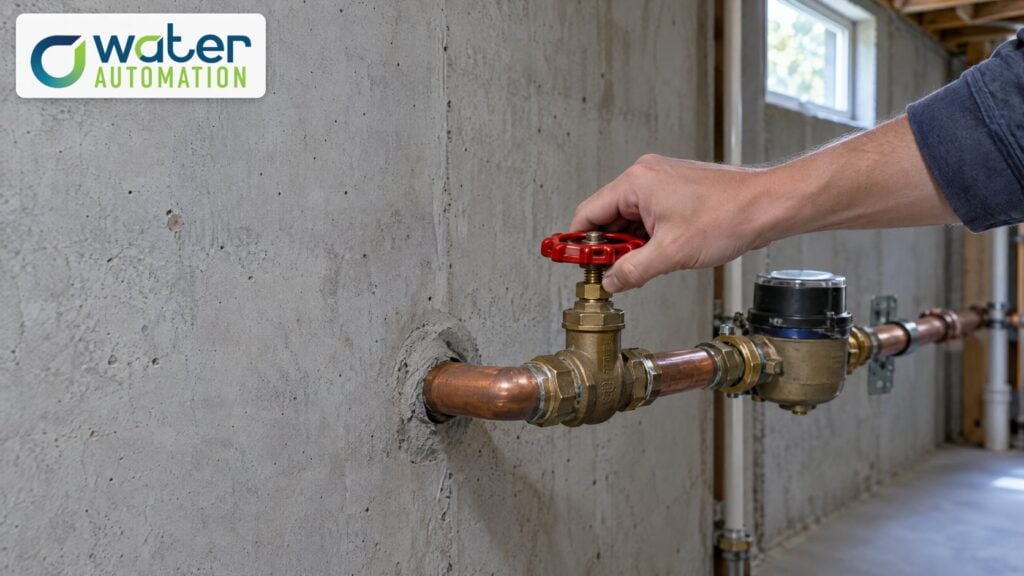
Here’s how to turn off the main water to your house: find the main shut-off valve where the water line enters your home, and close it. A round wheel handle turns clockwise until it stops. A lever handle turns a quarter turn, until it sits across the pipe. Then open a faucet on the lowest floor to let the pressure out.
It takes under a minute when you know where the valve is. The trouble is that most people go looking for it for the first time with water already on the floor. Here’s where to look, how each kind of valve works, and what to do when it won’t budge.
Where is the main water shut-off valve?
The main valve sits on the water line where it enters the house, usually on the wall closest to the street. Check these spots first:
- Basement or crawl space, on the front foundation wall, often a few feet from the water meter.
- Near the water heater, water softener or well tank. The main line often runs past them.
- Garage, utility room or laundry room, low on a wall or behind an access panel.
- Outside the house. In warmer parts of the country, where pipes don’t need protection from frost, the main valve is often on an outside wall near a hose faucet, or in a covered box in the ground.
- At the curb. Most homes on city water also have a valve at the meter, in a ground box near the street or sidewalk. That one usually belongs to the water utility (more on it below).
Still can’t find it? Follow the pipe from your water meter toward the house, check your home inspection report (inspectors usually note the main shut-off), or call your water utility.
In an apartment or condo
Many units have their own shut-off, behind an access panel, in a utility closet or near the unit’s water heater. Some don’t, and the only main valve controls a whole floor or the whole building. Ask your property manager or HOA now where your unit’s valve is and who to call after hours.
Every toilet and sink also has its own small valve. For a leak in one spot, that’s often the fastest way to stop it.
How to turn off the main water valve
First, work out which type of valve you have.
Gate valve (round wheel handle)
Gate valves are common in older homes. Turn the wheel clockwise (“righty-tighty”) until it stops. It can take several full turns. Stop when it gets firm. Don’t force it, because old gate valves can break inside.
Ball valve (lever handle)
Ball valves are common in newer homes. Turn the lever a quarter turn so the handle sits across the pipe instead of along it. Across the pipe means closed; in line with the pipe means open.
Then release the pressure
- Open a cold-water faucet on the lowest floor. Water will run for a few seconds, then slow to a trickle if the valve is closed.
- Flush a toilet once if you’re draining the system for a repair.
- If the water will be off for a while, set a gas water heater to “pilot” or “vacation”, or switch off the breaker for an electric one, so it isn’t heating with low water.
Shutting off the water at the meter
The curb valve at the meter is usually turned with a meter key (also called a curb key), a long T-handled tool sold at hardware stores. Many water utilities ask customers not to operate it and will send someone out through their emergency line, so check your utility’s rules before you buy a key. Some meter boxes also have a customer-side valve with a handle you can turn yourself.
What to do if the main shut-off valve is stuck
Valves that haven’t moved in years often seize. Before you call a plumber:
- Work it gently. Try small back-and-forth movements instead of one hard turn.
- Use a wrench with care. A wrench on a wheel handle gives you leverage, but too much can snap the stem or twist the pipe. Support the pipe with your other hand.
- Skip the cheater bar. If it won’t turn with moderate force, stop.
- Check the stem for a leak. If water seeps around the stem when you turn it, the packing nut behind the handle may need a slight tighten: hold the valve body steady with one wrench and turn the nut about an eighth of a turn clockwise with another.
If the valve won’t close or leaks badly, use the curb valve or call your utility, then have a plumber replace it. Many plumbers swap old gate valves for quarter-turn ball valves, which close faster in an emergency.
How to turn the water back on
- Close the faucets you opened.
- Open the main valve slowly, a quarter turn at a time, so pressure builds gently.
- Open a faucet on each floor to let the air out. Expect some sputtering.
- Check under sinks and around toilets for drips.
- Turn the water heater back on once its tank is full.
Test the valve twice a year
A valve that gets turned once or twice a year is less likely to seize when you need it. Close it, open it again, show everyone in the house where it is, and hang a tag on it. If you need a meter key or a wrench to turn it, keep one nearby. The Insurance Information Institute puts finding the main shut-off and learning how it works on its list of steps to take before a hard freeze (Triple-I).
You don’t always need the main
Most indoor leaks start at a fixture: a toilet supply line, the hoses under a sink, or the line to the refrigerator’s ice maker. Each one has its own shut-off valve, and closing it keeps the rest of the house running. The catch is that someone has to be there to close it.
That’s the gap aquaHALT fills. It installs at a single toilet, sink or ice maker. When its floor sensor gets wet, it closes that fixture’s water and sounds an alarm, even when nobody is home. It runs on 2 AA batteries and needs no Wi-Fi or app. Compare whole-house and point-of-use shut-off systems, or find the right aquaHALT for each fixture.
FAQ
Which way do you turn a water shut-off valve to close it?
Turn a wheel handle clockwise until it stops. Turn a lever handle a quarter turn so it sits across the pipe.
Can I turn off the water at the meter myself?
Sometimes. The curb valve usually needs a meter key, and many utilities prefer to do it themselves. If your house valve won’t close, call your utility’s emergency line.
Do I need to turn off the water heater when I shut off the main?
Not for a quick shutoff. If you’ll drain the pipes or leave the water off for hours, set a gas heater to pilot or vacation, or switch off an electric heater at the breaker.
How do I turn off the water in an apartment?
Use your unit’s shut-off if it has one, or the valve at the fixture that’s leaking. If neither stops it, call building management, who control the building’s main.
See also
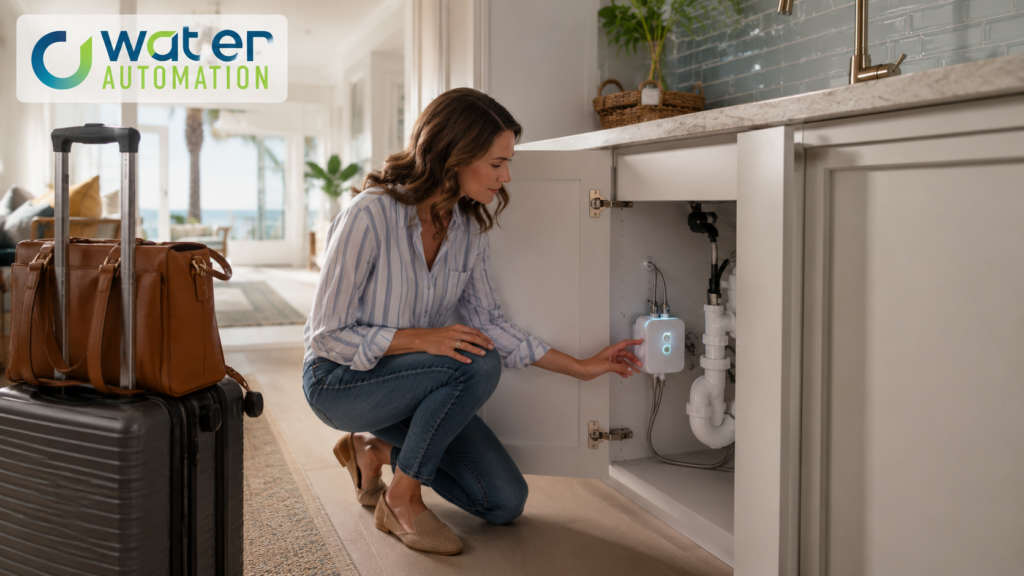
automatic water shutoff for vacation homes works best when the decision begins with observed conditions rather than assumptions. Owners often see a symptom and jump directly to a product, repair
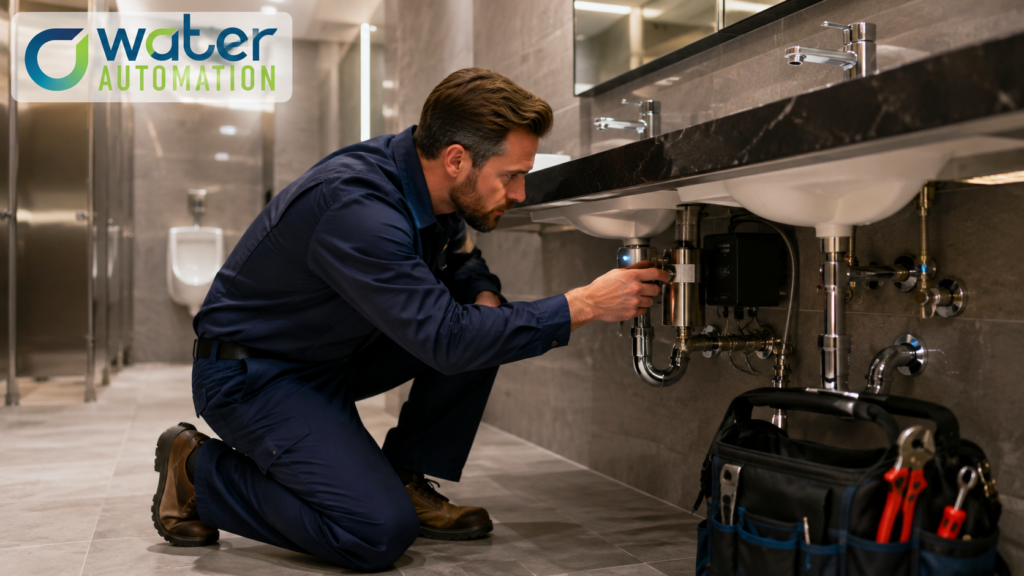
commercial restroom leak detection works best when the decision begins with observed conditions rather than assumptions. Owners often see a symptom and jump directly to a product, repair or proposal.
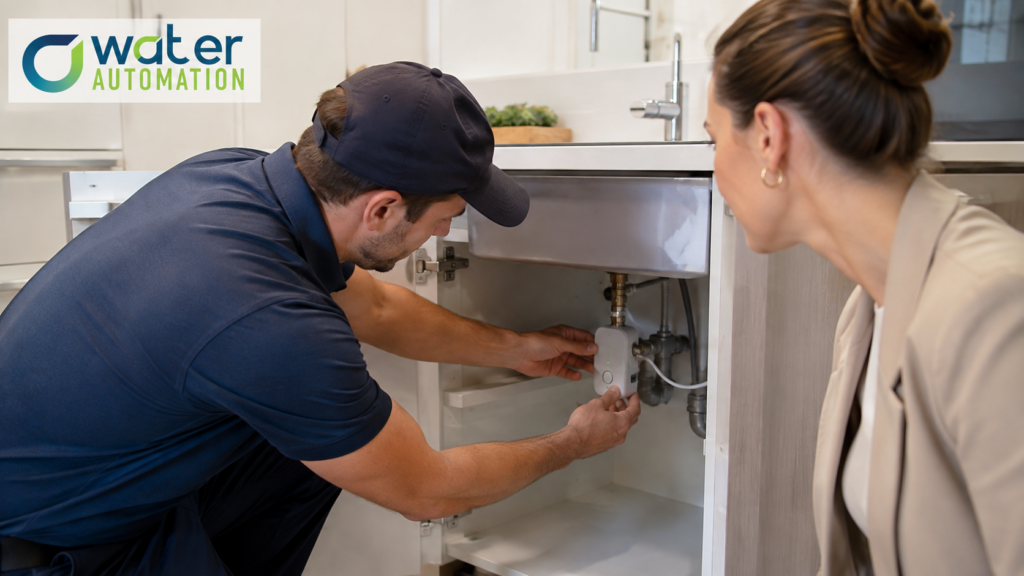
fixture-level leak detection for apartments works best when the decision begins with observed conditions rather than assumptions. Owners often see a symptom and jump directly to a product, repair or
water leak protection for new construction works best when the decision begins with observed conditions rather than assumptions. Owners often see a symptom and jump directly to a product, repair