

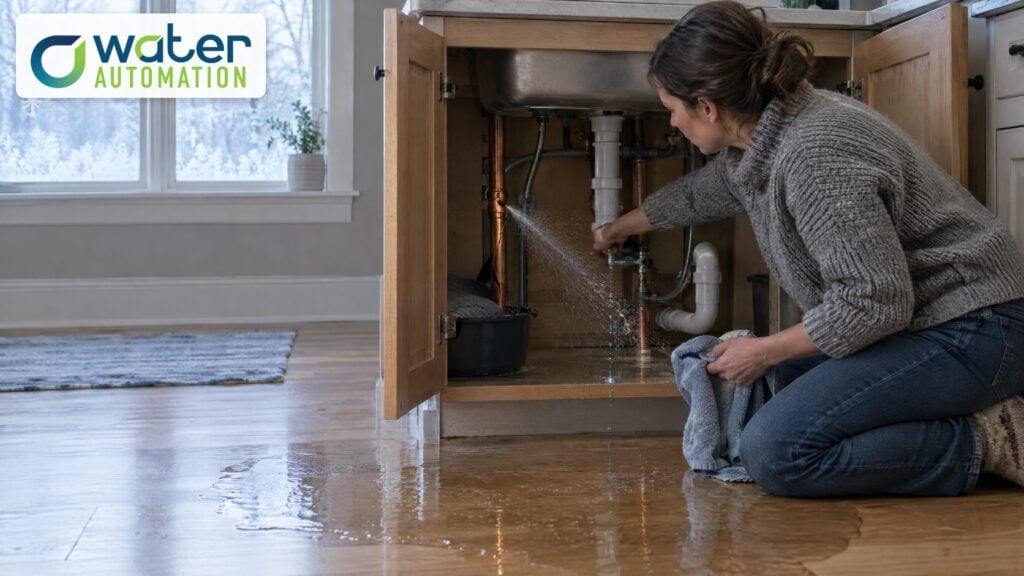
Here’s what to do when you have a burst pipe: shut off the water first. Close the main shut-off valve, or the valve at the fixture if the break is on a toilet or sink line. Then keep away from water near outlets and the electrical panel, open the faucets to drain the lines, and call a plumber. Photograph the damage before you clean up, and start drying right away.
A burst pipe is one of the few home emergencies where every minute counts, because the water doesn’t stop on its own. Here’s the order to work in.
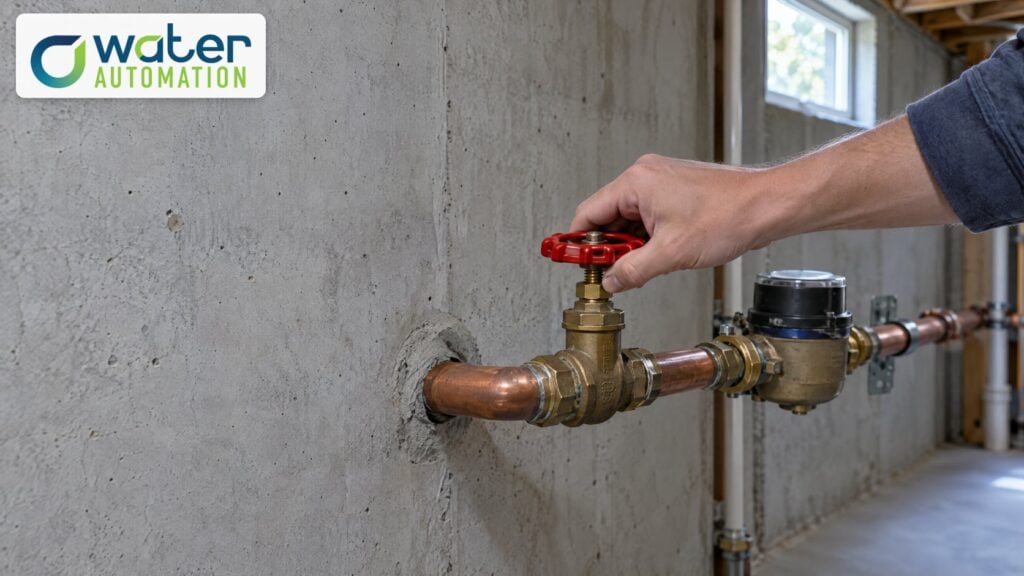
Go straight to the main shut-off valve and close it. A wheel handle turns clockwise; a lever turns a quarter turn so it sits across the pipe. If you don’t know where your valve is, our guide to turning off the main water to your house shows where to look.
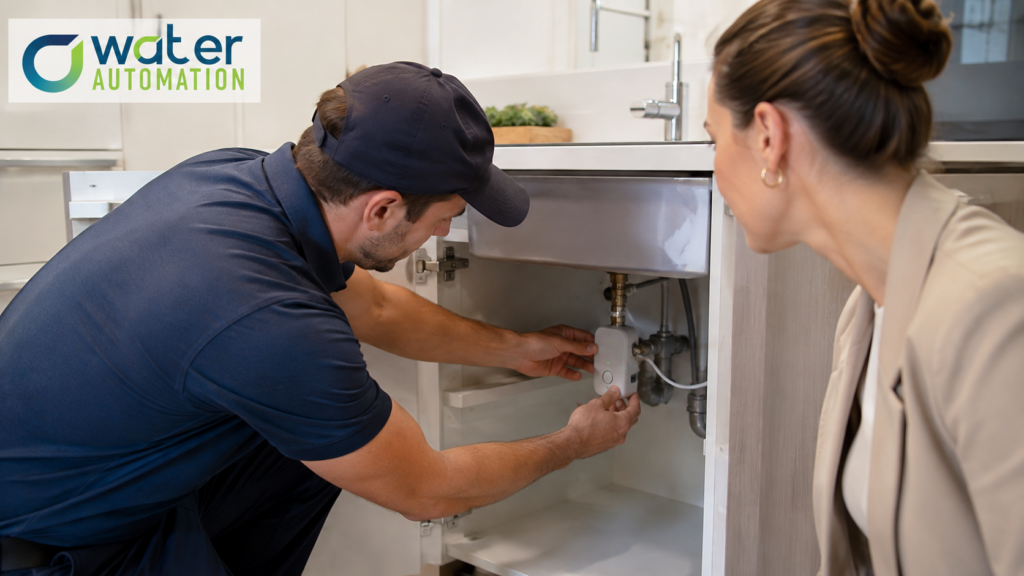
If the break is on one fixture’s line (a toilet supply hose, the lines under a sink or the ice maker line), close the small valve at that fixture instead. It’s faster, and the rest of the house keeps its water.
Water and electricity don’t mix. If water is near outlets, cords, appliances or the electrical panel, don’t walk through it to reach the breaker; call your power company or an electrician. If the ceiling below is bulging with water, keep everyone out from under it.
Pipes usually burst where they get cold or sit out of sight: outside walls, crawl spaces, attics, garages, and the cabinets under sinks on outside walls.
If the pipe froze and split, other sections may still be frozen. Thaw them slowly with a hair dryer, starting at the end nearest the faucet, or call a plumber. Never use an open flame.
Speed matters here. The EPA advises drying water-damaged areas and items within 24 to 48 hours to prevent mold growth (EPA). If a lot of water got into walls, ceilings or carpet, a water restoration company has the equipment to dry it in time.
Take photos and video of the break and the damage before you clean up, and keep receipts for everything you spend. If the plumber cuts out the broken section, ask to keep it.
You don’t have to wait for an adjuster before you stop the water and protect your home. The Insurance Information Institute’s advice is to turn off the water, mop up, and call your agent or company as soon as you can; an adjuster doesn’t need to see the spill first, but will want to inspect damaged items (Triple-I).
Every policy is different, but in general:
Read your own policy, and see our guides to hidden water damage and insurance and common water damage exclusions.
Tell building management or the HOA right away, even if you’ve already closed a valve. They may need to shut off a riser, check the units below, and call their own plumber and insurer. If you rent, your renters insurance usually covers your belongings, and the building’s policy covers the structure.
Our winter plumbing guide covers the risks region by region.
aquaHALT protects one fixture at a time: a toilet, a sink or an ice maker. If a supply hose bursts at that fixture, the water reaches its floor sensor, and it closes that fixture’s water and sounds an alarm, even with nobody home. It won’t stop a pipe that bursts inside a wall; that takes a valve on the main line. See whole-house vs point-of-use shut-off systems to work out what fits your home.
Shut off the water at the main valve, or at the fixture’s own valve if the break is on its supply line.
Generally yes, when the damage is sudden and accidental. Policies usually exclude repairing the pipe itself, long-running leaks, and damage from not keeping the home heated. Check your policy.
The EPA advises drying water-damaged areas and items within 24 to 48 hours to prevent mold growth, so start drying the same day.
Yes, if you’ve drained the pipes or the water will be off for a while. Set a gas heater to pilot or vacation, or switch off an electric heater at the breaker.
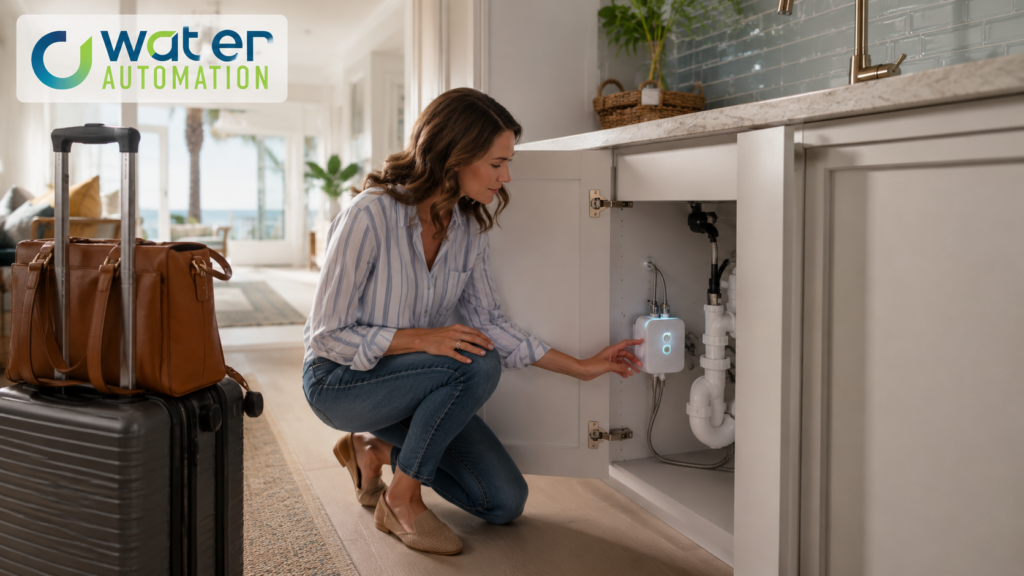
automatic water shutoff for vacation homes works best when the decision begins with observed conditions rather than assumptions. Owners often see a symptom and jump directly to a product, repair
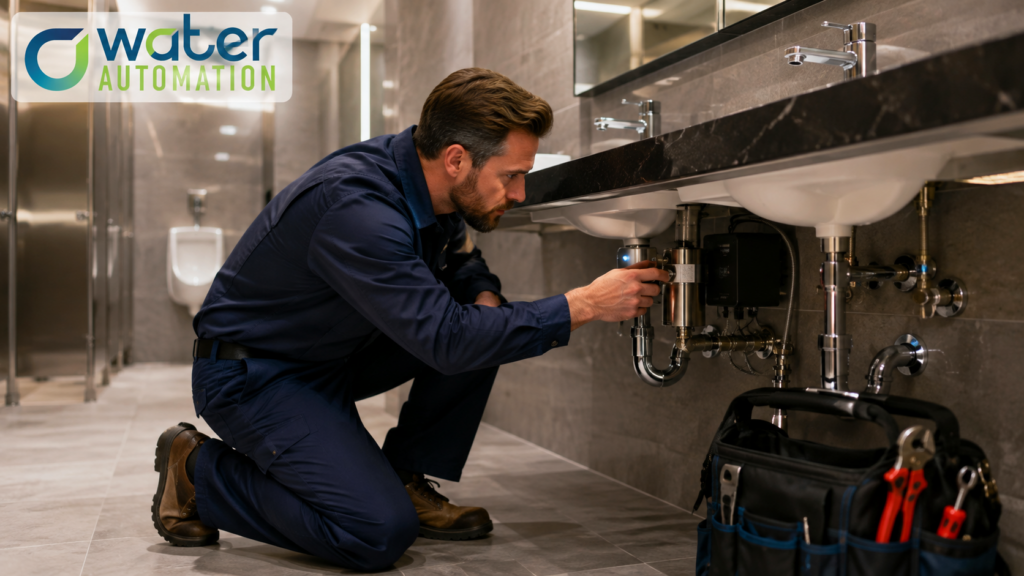
commercial restroom leak detection works best when the decision begins with observed conditions rather than assumptions. Owners often see a symptom and jump directly to a product, repair or proposal.
fixture-level leak detection for apartments works best when the decision begins with observed conditions rather than assumptions. Owners often see a symptom and jump directly to a product, repair or