

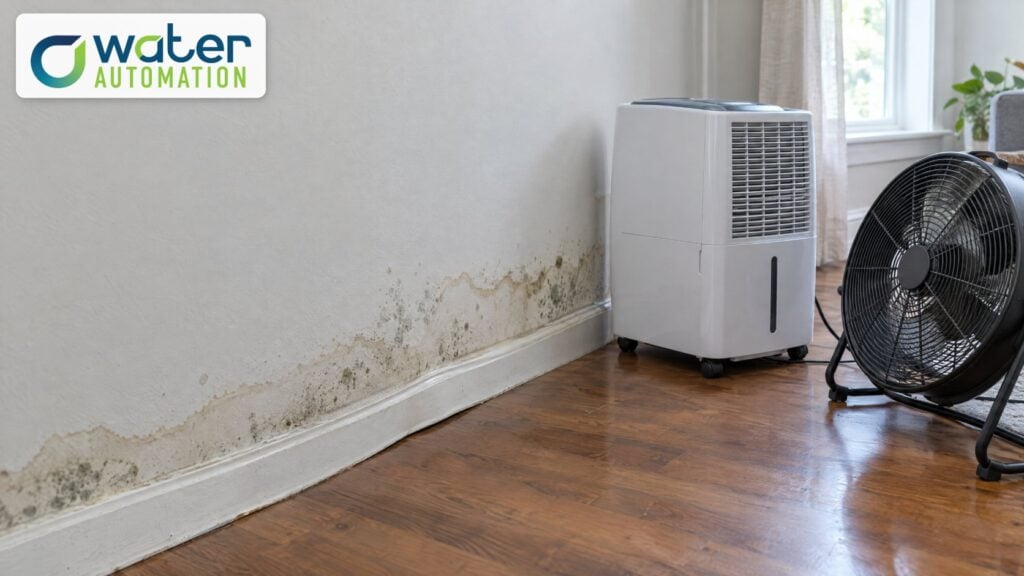
How long does it take for mold to grow after water damage? It can start on wet materials within 24 to 48 hours, which is why the EPA advises drying water-damaged areas and items within that window (EPA). You may not be able to see it, especially inside a wall, under carpet or above a ceiling, so a room that looks fine after a leak isn’t proof that it is.
Here’s what decides how fast mold grows, how different materials hold up, and what to do in the first two days.
Mold spores are already present in every home. To grow, they need moisture, something to feed on (drywall paper, wood, carpet backing, even dust) and a little time. A leak supplies the moisture, and the clock starts.
Dry everything within 24 to 48 hours and, in most cases, mold won’t take hold. It isn’t a guarantee: the EPA notes that mold can still grow on some materials that were dried within 48 hours, and that it won’t always grow on materials that took longer (EPA). After two days, assume it may be growing in anything that’s still damp.
Drywall wicks water upward, and its paper facing feeds mold. The EPA’s water damage table says drywall can be dried in place if it isn’t swollen and the seams are intact; otherwise, remove it and replace it. The wall cavity behind it has to dry too, which is why restoration crews may cut a strip off the bottom of a wet wall.
Extract the water, run a dehumidifier and fans, and dry the subfloor underneath as well. The pad soaks up water too, and may need replacing. Carpet soaked by dirty water should be thrown out.
The EPA’s table lists wet ceiling tiles and cellulose or fiberglass insulation as items to discard and replace. A stained ceiling after a leak from above is worth opening up to check the insulation and joists behind it.
Wood framing, cabinets and floors can usually be dried and cleaned. Hard surfaces like tile, metal and plastic clean up with detergent and water.
If the leak may still be active, run through these DIY checks for a hidden leak.
It affects people differently. The CDC says mold can cause a stuffy nose, sore throat, coughing or wheezing, burning eyes or a skin rash, and that people with asthma, mold allergies or weakened immune systems can react more severely (CDC). The CDC doesn’t recommend testing to find out which type of mold you have: if you can see it or smell it, remove it.
It depends on what caused it. Mold from a sudden, covered leak, like a burst supply line, may be covered. Mold from a slow leak that went on for months usually isn’t. We go into insurance and hidden water damage in a separate post, but check your own policy.
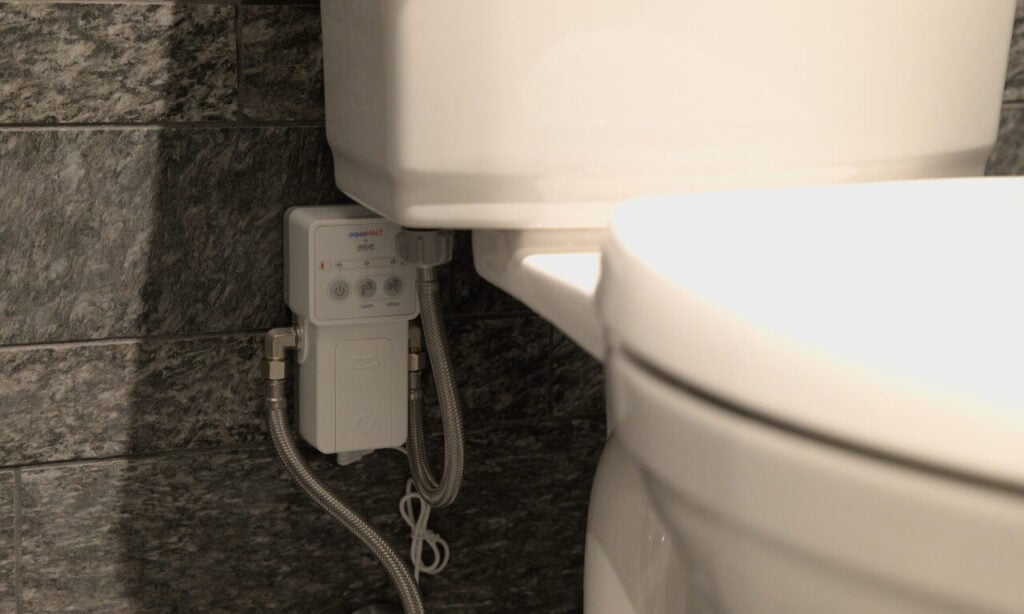
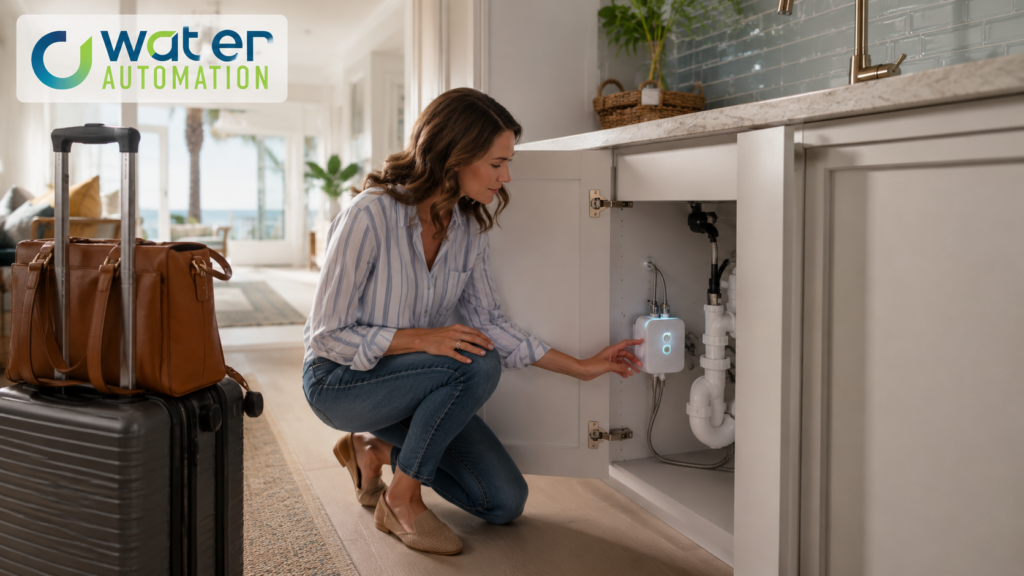
The less water that escapes, the less there is to dry. A fixture can leak with nobody home. aquaHALT closes the water to one toilet, sink or ice maker when its floor sensor gets wet, so the supply is cut when the first water reaches the sensor, not whenever someone happens to walk in. That stops a leak downstream of the unit, but not one upstream of it, in the hose from the wall valve. On the toilet and ice maker models there’s a beep, too. There’s no Wi-Fi or app to set up, and every model runs on batteries. See the range.
It can start. That’s why the EPA’s guidance is to dry water-damaged areas and items within 24 to 48 hours.
In most cases, no. It isn’t guaranteed, though, especially for porous materials or water trapped inside walls.
A musty smell, stains, bubbling paint or a high moisture meter reading are the usual clues. A professional can open a small section of wall to check.
Usually it isn’t needed. Scrub hard surfaces with detergent and water and dry them, and throw out porous materials that have grown mold. Never mix bleach with ammonia.
automatic water shutoff for vacation homes works best when the decision begins with observed conditions rather than assumptions. Owners often see a symptom and jump directly to a product, repair