“What gets measured gets managed.” — Peter Drucker
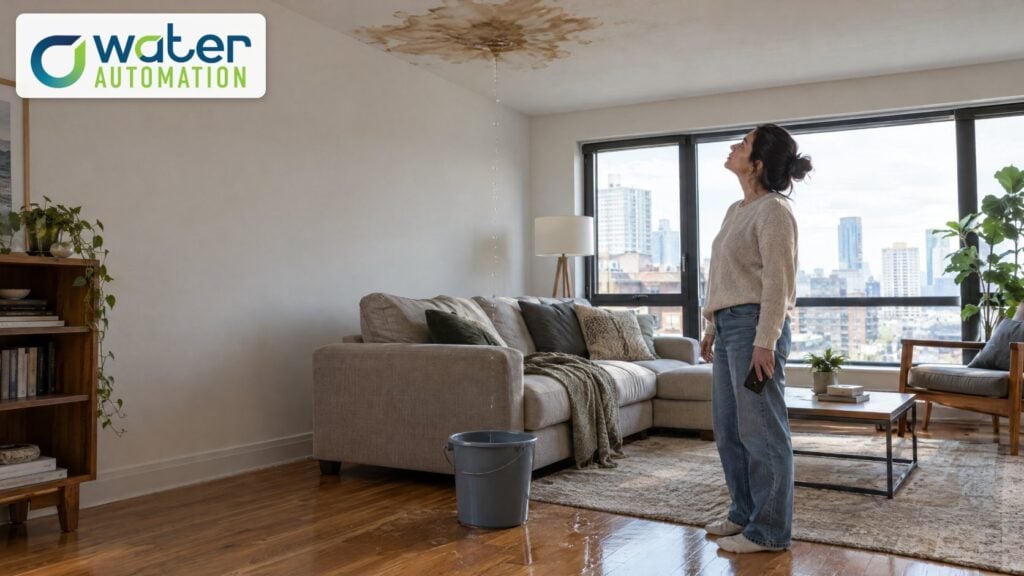
But what about what can’t be seen? What if water is pooling silently behind your walls or above your ceiling tiles?
That’s where thermal imaging for water leaks becomes indispensable. It’s one of the most efficient, non-destructive tools I use when tracking hidden moisture without ripping walls apart.
Thermal imaging cameras don’t detect water directly—they pick up temperature differences. When a leak causes moisture buildup, it changes the thermal pattern of the surrounding material. Most often, the wet area is cooler due to evaporation. On a thermal camera, this appears as a distinct shape or temperature anomaly that wouldn’t be visible to the naked eye.
The best part? Scanning an entire wall or ceiling takes minutes. You immediately see what areas are likely compromised. I always verify these readings with a moisture meter to ensure accuracy—because not every cold spot is a leak. HVAC ducts or shaded exterior walls can create similar patterns.
I’ve used thermal imaging for water leaks in homes, office buildings, schools, and industrial spaces. It’s particularly useful after flooding or suspected roof leaks, where finding the origin point is critical to minimizing repair costs.
Want to see what this looks like in practice? FLIR’s building diagnostics guide shows how thermal imaging is used across different sectors.
For professionals who want faster diagnostics, more credibility with customers, and minimal disruption to properties, thermal imaging for water leaks is a must-have. It’s not just a flashy gadget—it’s a precision tool that saves money and prevents unnecessary damage.