


Battery-Powered Water Leak Detectors vs Smart Home Systems: Which Is Better?
Water damage is one of the most expensive problems homeowners and property managers face. A leaking toilet, burst supply line, or faulty appliance connection can quickly cause serious flooding, mold growth, damaged flooring, and costly repairs.
To reduce these risks, more people are investing in water leak detection systems to protect their homes and properties before leaks become disasters.
However, many buyers find themselves comparing two main options:
- Battery-powered water leak detectors
- Smart home leak detection systems
While both types of systems aim to prevent water damage, they differ significantly in cost, installation, complexity, and reliability.
In this guide, we’ll compare battery-powered water leak detectors vs smart home systems to help homeowners, apartment owners, and property managers choose the best leak protection solution for their needs.
Why Water Leak Detection Matters
Water leaks often happen unexpectedly and continue spreading when nobody is present to respond.
Common leak sources include:
- Toilets
- Sinks
- Refrigerator water lines
- Washing machines
- Water heaters
- Appliance connections
Without leak detection, even a small plumbing failure can result in:
- Expensive repairs
- Mold remediation
- Insurance claims
- Structural damage
- Tenant disruption
Modern leak detection systems help reduce these risks by identifying leaks early and stopping water flow before widespread flooding occurs.
What Is a Battery-Powered Water Leak Detector?
A battery-powered water leak detector is a self-contained leak protection device designed to detect water and respond automatically without requiring complicated wiring or smart-home integration.
These systems are typically:
- Easy to install
- Powered by standard batteries
- Independent from Wi-Fi
- Designed for DIY setup
- Focused on practical leak prevention
Some advanced battery-powered systems also include automatic water shut-off functionality, helping stop leaks at the source.
What Is a Smart Home Leak Detection System?
Smart home leak detection systems connect to:
- Wi-Fi networks
- Mobile apps
- Smart-home ecosystems
- Cloud-based monitoring platforms
These systems often provide:
- Smartphone alerts
- Remote monitoring
- Automation integrations
- Real-time notifications
Some smart systems can also connect to automatic shut-off valves.
However, many smart-home systems require:
- Internet connectivity
- Mobile apps
- Subscription services
- Professional installation
- Electrical wiring
Key Differences Between Battery-Powered and Smart Home Leak Detection Systems
Understanding the major differences helps buyers choose the right solution for their property.
Installation Complexity
Battery-Powered Systems
Battery-powered leak detectors are usually designed for quick DIY installation.
Benefits include:
- No electrician required
- No plumber required
- No wiring
- Fast setup
- Flexible placement
Many homeowners can install these systems in minutes.
Smart Home Systems
Smart-home leak systems often involve:
- Wi-Fi setup
- App configuration
- Smart-home pairing
- Hub integration
- Professional installation
For some users, this added complexity may become frustrating or expensive.
Reliability During Power or Internet Outages
Battery-Powered Systems
Battery-operated leak detectors continue working even during:
- Power outages
- Wi-Fi failures
- Internet disruptions
This independence provides reliable protection regardless of network conditions.
Smart Home Systems
Smart-home systems often depend heavily on:
- Internet connectivity
- Router functionality
- Cloud services
- App communication
If power or Wi-Fi fails, certain features may become unavailable.
Ease of Use
Battery-Powered Systems
Battery-powered devices are often preferred for their simplicity.
Homeowners appreciate:
- Minimal setup
- Straightforward operation
- No subscriptions
- No app management
The focus remains on automatic leak protection rather than technology management.
Smart Home Systems
Smart systems may appeal to users who enjoy advanced automation and connected home ecosystems.
However, some homeowners find:
- App maintenance
- Connectivity troubleshooting
- Software updates
- Notification overload
to be unnecessary for basic leak prevention.
Cost Comparison
Battery-Powered Systems
Battery-powered systems are typically:
- More affordable upfront
- Less expensive to install
- Lower maintenance
- Free from monthly subscription fees
This makes them attractive for:
- Apartments
- Rental properties
- Vacation homes
- Multi-unit buildings
Smart Home Systems
Smart-home systems may involve additional costs such as:
- Professional installation
- Smart hubs
- Subscription plans
- Additional sensors
- App ecosystem requirements
Costs can increase significantly when scaling protection across multiple units.
Automatic Shut-Off Protection
One of the most important features in any leak detection system is automatic shut-off capability.
Why It Matters
Some systems only send alerts after detecting water.
The problem is:
- Homeowners may not see alerts immediately
- Tenants may ignore notifications
- Water continues flowing until manually stopped
Automatic shut-off systems actively stop water flow the moment a leak occurs.
This dramatically reduces flooding risk.
Battery-Powered Shut-Off Systems
Modern battery-powered systems like aquaHALT combine:
- Leak detection
- Automatic shut-off
- DIY installation
- Independent battery operation
This provides practical protection without requiring complicated smart-home infrastructure.
Which System Is Better for Apartments?
For apartments and multi-unit properties, battery-powered systems often offer significant advantages.
Property managers typically prioritize:
- Easy installation
- Reliability
- Fast deployment
- Low maintenance
- Affordable scaling
Battery-powered systems meet these needs particularly well because they don’t require:
- Building-wide Wi-Fi setup
- Complex integration
- Extensive electrical work
This makes them ideal for apartment buildings and rental properties.
Which System Is Better for Vacation Homes?
Vacation homes are especially vulnerable to leaks because properties may remain vacant for extended periods.
Battery-powered automatic shut-off systems provide reliable protection without depending heavily on internet connectivity.
Even if the internet goes down, leak detection and shut-off protection continue operating.
Why Simplicity Matters in Leak Prevention
Many homeowners don’t necessarily need a fully connected smart-home ecosystem.
What they want is simple:
- Detect leaks quickly
- Stop water flow automatically
- Prevent expensive damage
- Protect the property 24/7
Battery-powered leak detectors focus directly on these core goals.
This simplicity often improves long-term reliability and ease of use.
The Growing Demand for DIY Leak Protection
In 2026, more homeowners and property managers are choosing DIY leak prevention solutions because they:
- Save installation costs
- Reduce maintenance complexity
- Avoid unnecessary subscriptions
- Provide immediate protection
Battery-powered systems continue growing in popularity because they deliver strong protection with minimal setup.
Choosing the Right Leak Detection System
The best leak detection system depends on your priorities.
If you want:
- Simple installation
- Reliable automatic protection
- Lower costs
- No wiring
- No complicated setup
then a battery-powered leak detection system may be the better choice.
If you prefer:
- Smart-home integrations
- Mobile app automation
- Remote ecosystem control
then a smart-home solution may fit your needs.
For many homeowners and property managers, practical leak prevention and reliability are more important than advanced automation features.
Protect Your Property With Smart Leak Detection
Water Automation provides battery-powered automatic leak detection and shut-off systems designed to stop leaks before they become expensive disasters.
The aquaHALT system helps homeowners and property managers protect toilets, sinks, ice makers, apartments, and commercial properties with simple DIY installation and reliable automatic shut-off protection.
When it comes to preventing water damage, the best system is the one that works reliably when you need it most.
See also
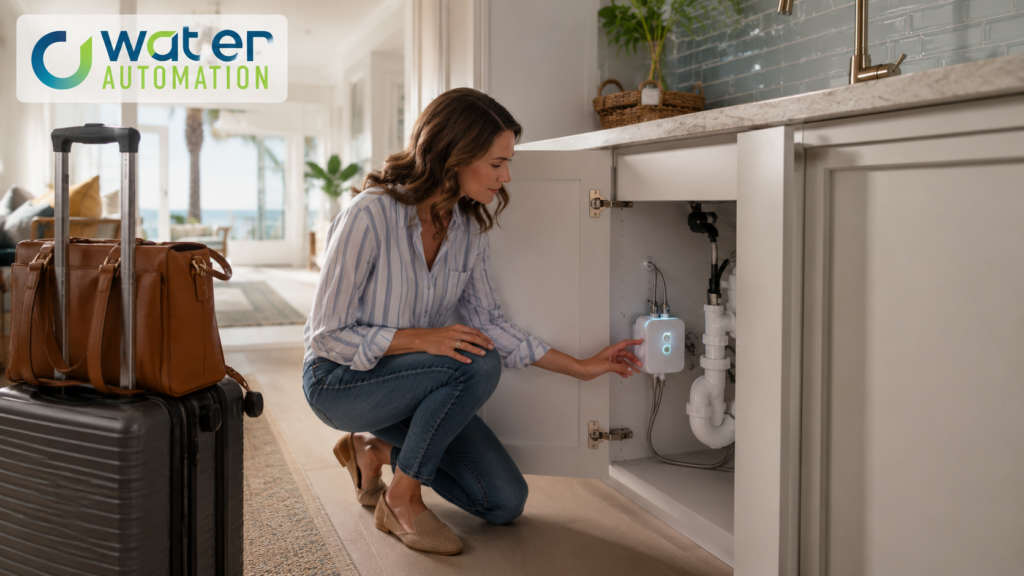
automatic water shutoff for vacation homes works best when the decision begins with observed conditions rather than assumptions. Owners often see a symptom and jump directly to a product, repair or proposal. A stronger process identifies what is happening, where it happens, who is affected and how the finished work will be verified. This guide turns that process into practical steps for properties in homes, apartments and commercial properties.
The right scope depends on fixture condition, connection compatibility, device access and a documented response process. A useful assessment connects those facts to the owner’s priorities, budget and timeline. It also separates immediate safety or damage-control needs from long-term improvements.
Why automatic water shutoff for vacation homes deserves a written plan
A written plan keeps different stakeholders focused on the same outcome. Begin with the locations, fixtures, rooms or building systems included in the project. Note recurring complaints, previous repairs, existing documentation and operational constraints. Photographs and dated observations are more useful than vague descriptions.
Define success in testable language. Instead of saying “make it better,” identify the event to prevent or detect, the area that must be protected, the expected response and the person responsible. This makes proposals easier to compare and gives the installer or contractor a clear acceptance target.
Review the relevant service information before requesting proposals. It establishes what the client actually offers. For broader context, consult this authoritative resource. General guidance does not replace a site-specific evaluation, manufacturer instructions, applicable codes or qualified professional advice.
Inspect existing conditions before choosing a solution
Start with a safe, structured inspection. Do not climb onto damaged roofs, open energized equipment or modify plumbing or security hardware without the right training. Record visible conditions from safe locations and gather drawings, maintenance records, prior invoices and equipment details.
Look for patterns. Does the issue appear only after a storm, during peak occupancy, at one fixture, after a network change or in a particular season? When did it begin? Has a temporary repair changed the symptom? Pattern questions help distinguish a local defect from a system-wide problem.
Existing infrastructure may be reusable, but reuse should be verified rather than assumed. Condition, compatibility, capacity, support status and access all matter. A component that still turns on may nevertheless be unsuitable for the intended result.
Questions to answer during the review
- What problem are we trying to prevent, detect or correct?
- Which areas and users are included or excluded?
- What existing components may remain, and how will compatibility be confirmed?
- Are there access, safety, power, network, drainage or shutdown constraints?
- Who approves changes and who owns the system after handoff?
- What evidence will prove the work performs as intended?
Build a comparable scope and budget
Ask providers to price the same written scope. A lower proposal may exclude access work, disposal, testing, documentation or support. A higher proposal may include features that are unnecessary for the property. Require clear assumptions, exclusions and allowances so the comparison is about value rather than headline totals.
Include preparation, installation, commissioning and closeout. Preparation may involve surveys, measurements, permits, coordination or product selection. Installation should identify locations and materials. Commissioning should state what is tested. Closeout should include photographs, reports, manuals, settings or as-built information appropriate to the work.
Avoid making decisions under artificial pressure. Urgent leaks and hazards require prompt stabilization, but long-term work should still have a documented reason. Ask why a recommended option fits the observed condition, what alternatives were considered and what would change the recommendation.
Pilot and verify automatic water shutoff for vacation homes
For repeatable installations or multi-location projects, test a representative area first. A pilot exposes access problems, incompatible fittings or hardware, documentation gaps and training needs before they multiply. Choose a normal site or unit, not only the easiest example.
Record baseline conditions, the approved work and the acceptance results. If the pilot changes the plan, update the scope before scaling. Communicate expected interruptions and support contacts to occupants or staff. Keep safety procedures and official instructions available to the people performing the work.
Commissioning should prove realistic operation, not merely confirm that something powers on or looks finished. Test normal behavior and relevant warning, failure or response conditions. Confirm labels, settings, drainage paths, permissions, shutoff behavior or surface details as applicable.
Acceptance checklist
- Confirm installed locations and products match the approved scope.
- Test normal operation and relevant warning or failure conditions.
- Record exceptions and correct them before final sign-off.
- Collect photographs, reports, manuals and approved field changes.
- Train the person responsible for routine use and maintenance.
- Record support contacts and the process for future changes.
Plan maintenance and ownership
Every project needs an owner after installation. Name the person responsible for routine checks, account or access changes, cleaning, batteries, drainage, inspections or service calls as applicable. Put recurring tasks on a calendar and keep records where the next technician can find them.
Schedule an early follow-up after normal use or a relevant weather cycle. Occupancy, seasonal conditions and daily operation can reveal issues that were not visible on completion day. Prompt corrections protect the investment and keep small defects from becoming disruptive.
See the client’s related resource for the next layer of information. Connecting educational content to a real service or product page helps the reader move from research to an appropriate, supportable action.
Common mistakes to avoid
The most common mistake is selecting a solution before confirming the cause. Others include assuming every property or unit is identical, ignoring existing-condition constraints, failing to assign response ownership and accepting work without testing or documentation. Scattered closeout records also make future maintenance slower and riskier.
A better rhythm is simple: inspect, define, compare, pilot, verify and document. It does not remove every surprise, but it creates a traceable reason for each decision and a fair standard for judging the result.
Frequently asked questions
Can an owner complete the initial review?
Yes, owners can gather records and make safe observations. Hazardous access, technical testing and final recommendations should be handled by qualified professionals.
Is the most expensive option always best?
No. The best option is the one that addresses verified conditions, fits the property and includes the testing and support the owner actually needs.
Can existing equipment or materials be reused?
Sometimes. Reuse depends on condition, compatibility, capacity, support status and the intended outcome.
What should I receive at handoff?
Request appropriate test results, photos, manuals, settings, product details, as-built changes, maintenance instructions and support contacts.
Take the next step on automatic water shutoff for vacation homes
Strong automatic water shutoff for vacation homes begins with evidence, a defined outcome and a scope that can be tested. The answer may be a focused repair, a phased rollout, a compatible product or a broader improvement; observed conditions should drive that choice.
Ready to discuss the property or project? Contact Water Automation / aquaHALT to share the location, goals and timing, and request the appropriate next step.
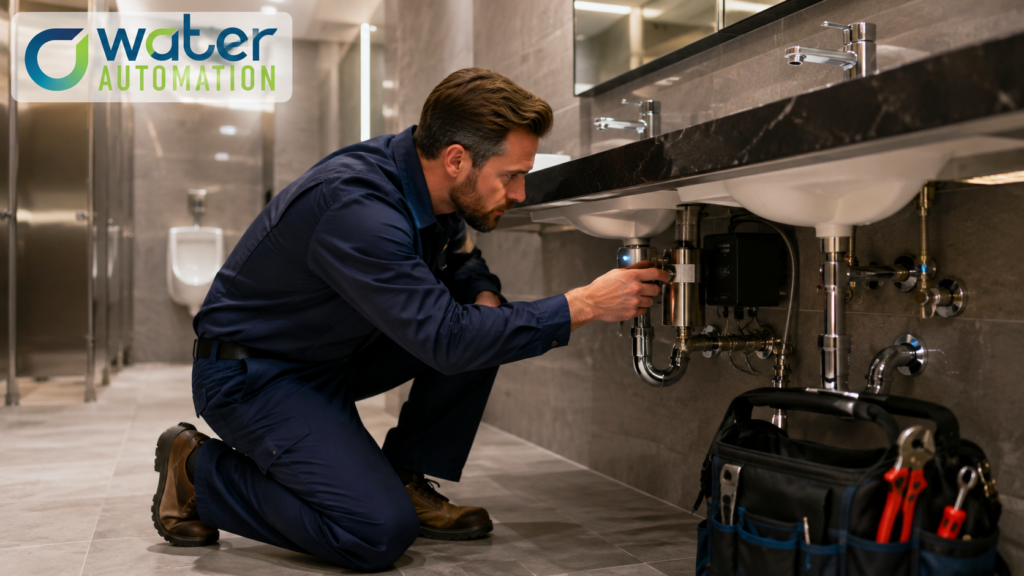
commercial restroom leak detection works best when the decision begins with observed conditions rather than assumptions. Owners often see a symptom and jump directly to a product, repair or proposal. A stronger process identifies what is happening, where it happens, who is affected and how the finished work will be verified. This guide turns that process into practical steps for properties in homes, apartments and commercial properties.
The right scope depends on fixture condition, connection compatibility, device access and a documented response process. A useful assessment connects those facts to the owner’s priorities, budget and timeline. It also separates immediate safety or damage-control needs from long-term improvements.
Why commercial restroom leak detection deserves a written plan
A written plan keeps different stakeholders focused on the same outcome. Begin with the locations, fixtures, rooms or building systems included in the project. Note recurring complaints, previous repairs, existing documentation and operational constraints. Photographs and dated observations are more useful than vague descriptions.
Define success in testable language. Instead of saying “make it better,” identify the event to prevent or detect, the area that must be protected, the expected response and the person responsible. This makes proposals easier to compare and gives the installer or contractor a clear acceptance target.
Review the relevant service information before requesting proposals. It establishes what the client actually offers. For broader context, consult this authoritative resource. General guidance does not replace a site-specific evaluation, manufacturer instructions, applicable codes or qualified professional advice.
Inspect existing conditions before choosing a solution
Start with a safe, structured inspection. Do not climb onto damaged roofs, open energized equipment or modify plumbing or security hardware without the right training. Record visible conditions from safe locations and gather drawings, maintenance records, prior invoices and equipment details.
Look for patterns. Does the issue appear only after a storm, during peak occupancy, at one fixture, after a network change or in a particular season? When did it begin? Has a temporary repair changed the symptom? Pattern questions help distinguish a local defect from a system-wide problem.
Existing infrastructure may be reusable, but reuse should be verified rather than assumed. Condition, compatibility, capacity, support status and access all matter. A component that still turns on may nevertheless be unsuitable for the intended result.
Questions to answer during the review
- What problem are we trying to prevent, detect or correct?
- Which areas and users are included or excluded?
- What existing components may remain, and how will compatibility be confirmed?
- Are there access, safety, power, network, drainage or shutdown constraints?
- Who approves changes and who owns the system after handoff?
- What evidence will prove the work performs as intended?
Build a comparable scope and budget
Ask providers to price the same written scope. A lower proposal may exclude access work, disposal, testing, documentation or support. A higher proposal may include features that are unnecessary for the property. Require clear assumptions, exclusions and allowances so the comparison is about value rather than headline totals.
Include preparation, installation, commissioning and closeout. Preparation may involve surveys, measurements, permits, coordination or product selection. Installation should identify locations and materials. Commissioning should state what is tested. Closeout should include photographs, reports, manuals, settings or as-built information appropriate to the work.
Avoid making decisions under artificial pressure. Urgent leaks and hazards require prompt stabilization, but long-term work should still have a documented reason. Ask why a recommended option fits the observed condition, what alternatives were considered and what would change the recommendation.
Pilot and verify commercial restroom leak detection
For repeatable installations or multi-location projects, test a representative area first. A pilot exposes access problems, incompatible fittings or hardware, documentation gaps and training needs before they multiply. Choose a normal site or unit, not only the easiest example.
Record baseline conditions, the approved work and the acceptance results. If the pilot changes the plan, update the scope before scaling. Communicate expected interruptions and support contacts to occupants or staff. Keep safety procedures and official instructions available to the people performing the work.
Commissioning should prove realistic operation, not merely confirm that something powers on or looks finished. Test normal behavior and relevant warning, failure or response conditions. Confirm labels, settings, drainage paths, permissions, shutoff behavior or surface details as applicable.
Acceptance checklist
- Confirm installed locations and products match the approved scope.
- Test normal operation and relevant warning or failure conditions.
- Record exceptions and correct them before final sign-off.
- Collect photographs, reports, manuals and approved field changes.
- Train the person responsible for routine use and maintenance.
- Record support contacts and the process for future changes.
Plan maintenance and ownership
Every project needs an owner after installation. Name the person responsible for routine checks, account or access changes, cleaning, batteries, drainage, inspections or service calls as applicable. Put recurring tasks on a calendar and keep records where the next technician can find them.
Schedule an early follow-up after normal use or a relevant weather cycle. Occupancy, seasonal conditions and daily operation can reveal issues that were not visible on completion day. Prompt corrections protect the investment and keep small defects from becoming disruptive.
See the client’s related resource for the next layer of information. Connecting educational content to a real service or product page helps the reader move from research to an appropriate, supportable action.
Common mistakes to avoid
The most common mistake is selecting a solution before confirming the cause. Others include assuming every property or unit is identical, ignoring existing-condition constraints, failing to assign response ownership and accepting work without testing or documentation. Scattered closeout records also make future maintenance slower and riskier.
A better rhythm is simple: inspect, define, compare, pilot, verify and document. It does not remove every surprise, but it creates a traceable reason for each decision and a fair standard for judging the result.
Frequently asked questions
Can an owner complete the initial review?
Yes, owners can gather records and make safe observations. Hazardous access, technical testing and final recommendations should be handled by qualified professionals.
Is the most expensive option always best?
No. The best option is the one that addresses verified conditions, fits the property and includes the testing and support the owner actually needs.
Can existing equipment or materials be reused?
Sometimes. Reuse depends on condition, compatibility, capacity, support status and the intended outcome.
What should I receive at handoff?
Request appropriate test results, photos, manuals, settings, product details, as-built changes, maintenance instructions and support contacts.
Take the next step on commercial restroom leak detection
Strong commercial restroom leak detection begins with evidence, a defined outcome and a scope that can be tested. The answer may be a focused repair, a phased rollout, a compatible product or a broader improvement; observed conditions should drive that choice.
Ready to discuss the property or project? Contact Water Automation / aquaHALT to share the location, goals and timing, and request the appropriate next step.
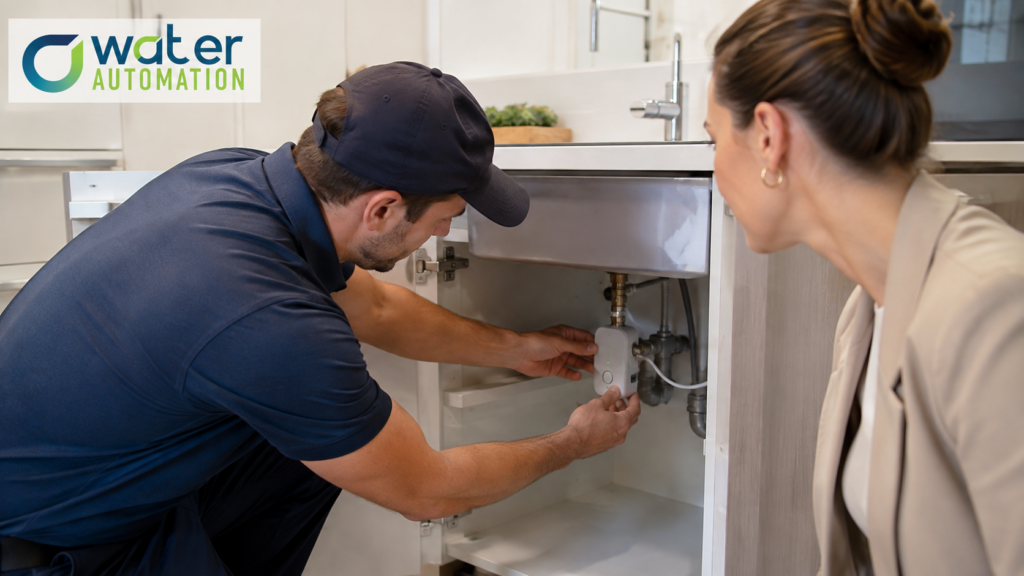
fixture-level leak detection for apartments works best when the decision begins with observed conditions rather than assumptions. Owners often see a symptom and jump directly to a product, repair or proposal. A stronger process identifies what is happening, where it happens, who is affected and how the finished work will be verified. This guide turns that process into practical steps for properties in homes, apartments and commercial properties.
The right scope depends on fixture condition, connection compatibility, device access and a documented response process. A useful assessment connects those facts to the owner’s priorities, budget and timeline. It also separates immediate safety or damage-control needs from long-term improvements.
Why fixture-level leak detection for apartments deserves a written plan
A written plan keeps different stakeholders focused on the same outcome. Begin with the locations, fixtures, rooms or building systems included in the project. Note recurring complaints, previous repairs, existing documentation and operational constraints. Photographs and dated observations are more useful than vague descriptions.
Define success in testable language. Instead of saying “make it better,” identify the event to prevent or detect, the area that must be protected, the expected response and the person responsible. This makes proposals easier to compare and gives the installer or contractor a clear acceptance target.
Review the relevant service information before requesting proposals. It establishes what the client actually offers. For broader context, consult this authoritative resource. General guidance does not replace a site-specific evaluation, manufacturer instructions, applicable codes or qualified professional advice.
Inspect existing conditions before choosing a solution
Start with a safe, structured inspection. Do not climb onto damaged roofs, open energized equipment or modify plumbing or security hardware without the right training. Record visible conditions from safe locations and gather drawings, maintenance records, prior invoices and equipment details.
Look for patterns. Does the issue appear only after a storm, during peak occupancy, at one fixture, after a network change or in a particular season? When did it begin? Has a temporary repair changed the symptom? Pattern questions help distinguish a local defect from a system-wide problem.
Existing infrastructure may be reusable, but reuse should be verified rather than assumed. Condition, compatibility, capacity, support status and access all matter. A component that still turns on may nevertheless be unsuitable for the intended result.
Questions to answer during the review
- What problem are we trying to prevent, detect or correct?
- Which areas and users are included or excluded?
- What existing components may remain, and how will compatibility be confirmed?
- Are there access, safety, power, network, drainage or shutdown constraints?
- Who approves changes and who owns the system after handoff?
- What evidence will prove the work performs as intended?
Build a comparable scope and budget
Ask providers to price the same written scope. A lower proposal may exclude access work, disposal, testing, documentation or support. A higher proposal may include features that are unnecessary for the property. Require clear assumptions, exclusions and allowances so the comparison is about value rather than headline totals.
Include preparation, installation, commissioning and closeout. Preparation may involve surveys, measurements, permits, coordination or product selection. Installation should identify locations and materials. Commissioning should state what is tested. Closeout should include photographs, reports, manuals, settings or as-built information appropriate to the work.
Avoid making decisions under artificial pressure. Urgent leaks and hazards require prompt stabilization, but long-term work should still have a documented reason. Ask why a recommended option fits the observed condition, what alternatives were considered and what would change the recommendation.
Pilot and verify fixture-level leak detection for apartments
For repeatable installations or multi-location projects, test a representative area first. A pilot exposes access problems, incompatible fittings or hardware, documentation gaps and training needs before they multiply. Choose a normal site or unit, not only the easiest example.
Record baseline conditions, the approved work and the acceptance results. If the pilot changes the plan, update the scope before scaling. Communicate expected interruptions and support contacts to occupants or staff. Keep safety procedures and official instructions available to the people performing the work.
Commissioning should prove realistic operation, not merely confirm that something powers on or looks finished. Test normal behavior and relevant warning, failure or response conditions. Confirm labels, settings, drainage paths, permissions, shutoff behavior or surface details as applicable.
Acceptance checklist
- Confirm installed locations and products match the approved scope.
- Test normal operation and relevant warning or failure conditions.
- Record exceptions and correct them before final sign-off.
- Collect photographs, reports, manuals and approved field changes.
- Train the person responsible for routine use and maintenance.
- Record support contacts and the process for future changes.
Plan maintenance and ownership
Every project needs an owner after installation. Name the person responsible for routine checks, account or access changes, cleaning, batteries, drainage, inspections or service calls as applicable. Put recurring tasks on a calendar and keep records where the next technician can find them.
Schedule an early follow-up after normal use or a relevant weather cycle. Occupancy, seasonal conditions and daily operation can reveal issues that were not visible on completion day. Prompt corrections protect the investment and keep small defects from becoming disruptive.
See the client’s related resource for the next layer of information. Connecting educational content to a real service or product page helps the reader move from research to an appropriate, supportable action.
Common mistakes to avoid
The most common mistake is selecting a solution before confirming the cause. Others include assuming every property or unit is identical, ignoring existing-condition constraints, failing to assign response ownership and accepting work without testing or documentation. Scattered closeout records also make future maintenance slower and riskier.
A better rhythm is simple: inspect, define, compare, pilot, verify and document. It does not remove every surprise, but it creates a traceable reason for each decision and a fair standard for judging the result.
Frequently asked questions
Can an owner complete the initial review?
Yes, owners can gather records and make safe observations. Hazardous access, technical testing and final recommendations should be handled by qualified professionals.
Is the most expensive option always best?
No. The best option is the one that addresses verified conditions, fits the property and includes the testing and support the owner actually needs.
Can existing equipment or materials be reused?
Sometimes. Reuse depends on condition, compatibility, capacity, support status and the intended outcome.
What should I receive at handoff?
Request appropriate test results, photos, manuals, settings, product details, as-built changes, maintenance instructions and support contacts.
Take the next step on fixture-level leak detection for apartments
Strong fixture-level leak detection for apartments begins with evidence, a defined outcome and a scope that can be tested. The answer may be a focused repair, a phased rollout, a compatible product or a broader improvement; observed conditions should drive that choice.
Ready to discuss the property or project? Contact Water Automation / aquaHALT to share the location, goals and timing, and request the appropriate next step.
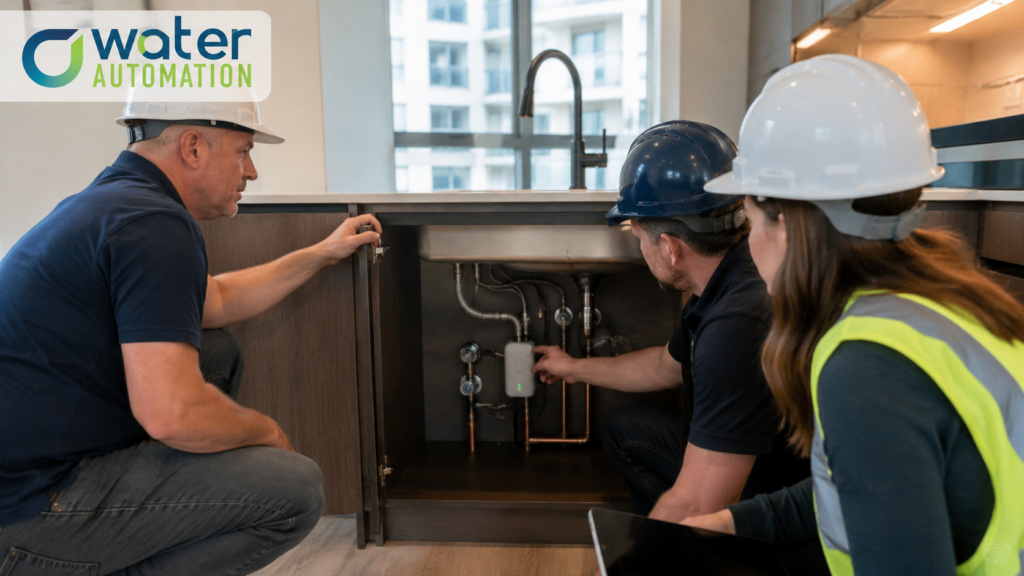
water leak protection for new construction works best when the decision begins with observed conditions rather than assumptions. Owners often see a symptom and jump directly to a product, repair or proposal. A stronger process identifies what is happening, where it happens, who is affected and how the finished work will be verified. This guide turns that process into practical steps for properties in homes, apartments and commercial properties.
The right scope depends on fixture condition, connection compatibility, device access and a documented response process. A useful assessment connects those facts to the owner’s priorities, budget and timeline. It also separates immediate safety or damage-control needs from long-term improvements.
Why water leak protection for new construction deserves a written plan
A written plan keeps different stakeholders focused on the same outcome. Begin with the locations, fixtures, rooms or building systems included in the project. Note recurring complaints, previous repairs, existing documentation and operational constraints. Photographs and dated observations are more useful than vague descriptions.
Define success in testable language. Instead of saying “make it better,” identify the event to prevent or detect, the area that must be protected, the expected response and the person responsible. This makes proposals easier to compare and gives the installer or contractor a clear acceptance target.
Review the relevant service information before requesting proposals. It establishes what the client actually offers. For broader context, consult this authoritative resource. General guidance does not replace a site-specific evaluation, manufacturer instructions, applicable codes or qualified professional advice.
Inspect existing conditions before choosing a solution
Start with a safe, structured inspection. Do not climb onto damaged roofs, open energized equipment or modify plumbing or security hardware without the right training. Record visible conditions from safe locations and gather drawings, maintenance records, prior invoices and equipment details.
Look for patterns. Does the issue appear only after a storm, during peak occupancy, at one fixture, after a network change or in a particular season? When did it begin? Has a temporary repair changed the symptom? Pattern questions help distinguish a local defect from a system-wide problem.
Existing infrastructure may be reusable, but reuse should be verified rather than assumed. Condition, compatibility, capacity, support status and access all matter. A component that still turns on may nevertheless be unsuitable for the intended result.
Questions to answer during the review
- What problem are we trying to prevent, detect or correct?
- Which areas and users are included or excluded?
- What existing components may remain, and how will compatibility be confirmed?
- Are there access, safety, power, network, drainage or shutdown constraints?
- Who approves changes and who owns the system after handoff?
- What evidence will prove the work performs as intended?
Build a comparable scope and budget
Ask providers to price the same written scope. A lower proposal may exclude access work, disposal, testing, documentation or support. A higher proposal may include features that are unnecessary for the property. Require clear assumptions, exclusions and allowances so the comparison is about value rather than headline totals.
Include preparation, installation, commissioning and closeout. Preparation may involve surveys, measurements, permits, coordination or product selection. Installation should identify locations and materials. Commissioning should state what is tested. Closeout should include photographs, reports, manuals, settings or as-built information appropriate to the work.
Avoid making decisions under artificial pressure. Urgent leaks and hazards require prompt stabilization, but long-term work should still have a documented reason. Ask why a recommended option fits the observed condition, what alternatives were considered and what would change the recommendation.
Pilot and verify water leak protection for new construction
For repeatable installations or multi-location projects, test a representative area first. A pilot exposes access problems, incompatible fittings or hardware, documentation gaps and training needs before they multiply. Choose a normal site or unit, not only the easiest example.
Record baseline conditions, the approved work and the acceptance results. If the pilot changes the plan, update the scope before scaling. Communicate expected interruptions and support contacts to occupants or staff. Keep safety procedures and official instructions available to the people performing the work.
Commissioning should prove realistic operation, not merely confirm that something powers on or looks finished. Test normal behavior and relevant warning, failure or response conditions. Confirm labels, settings, drainage paths, permissions, shutoff behavior or surface details as applicable.
Acceptance checklist
- Confirm installed locations and products match the approved scope.
- Test normal operation and relevant warning or failure conditions.
- Record exceptions and correct them before final sign-off.
- Collect photographs, reports, manuals and approved field changes.
- Train the person responsible for routine use and maintenance.
- Record support contacts and the process for future changes.
Plan maintenance and ownership
Every project needs an owner after installation. Name the person responsible for routine checks, account or access changes, cleaning, batteries, drainage, inspections or service calls as applicable. Put recurring tasks on a calendar and keep records where the next technician can find them.
Schedule an early follow-up after normal use or a relevant weather cycle. Occupancy, seasonal conditions and daily operation can reveal issues that were not visible on completion day. Prompt corrections protect the investment and keep small defects from becoming disruptive.
See the client’s related resource for the next layer of information. Connecting educational content to a real service or product page helps the reader move from research to an appropriate, supportable action.
Common mistakes to avoid
The most common mistake is selecting a solution before confirming the cause. Others include assuming every property or unit is identical, ignoring existing-condition constraints, failing to assign response ownership and accepting work without testing or documentation. Scattered closeout records also make future maintenance slower and riskier.
A better rhythm is simple: inspect, define, compare, pilot, verify and document. It does not remove every surprise, but it creates a traceable reason for each decision and a fair standard for judging the result.
Frequently asked questions
Can an owner complete the initial review?
Yes, owners can gather records and make safe observations. Hazardous access, technical testing and final recommendations should be handled by qualified professionals.
Is the most expensive option always best?
No. The best option is the one that addresses verified conditions, fits the property and includes the testing and support the owner actually needs.
Can existing equipment or materials be reused?
Sometimes. Reuse depends on condition, compatibility, capacity, support status and the intended outcome.
What should I receive at handoff?
Request appropriate test results, photos, manuals, settings, product details, as-built changes, maintenance instructions and support contacts.
Take the next step on water leak protection for new construction
Strong water leak protection for new construction begins with evidence, a defined outcome and a scope that can be tested. The answer may be a focused repair, a phased rollout, a compatible product or a broader improvement; observed conditions should drive that choice.
Ready to discuss the property or project? Contact Water Automation / aquaHALT to share the location, goals and timing, and request the appropriate next step.