

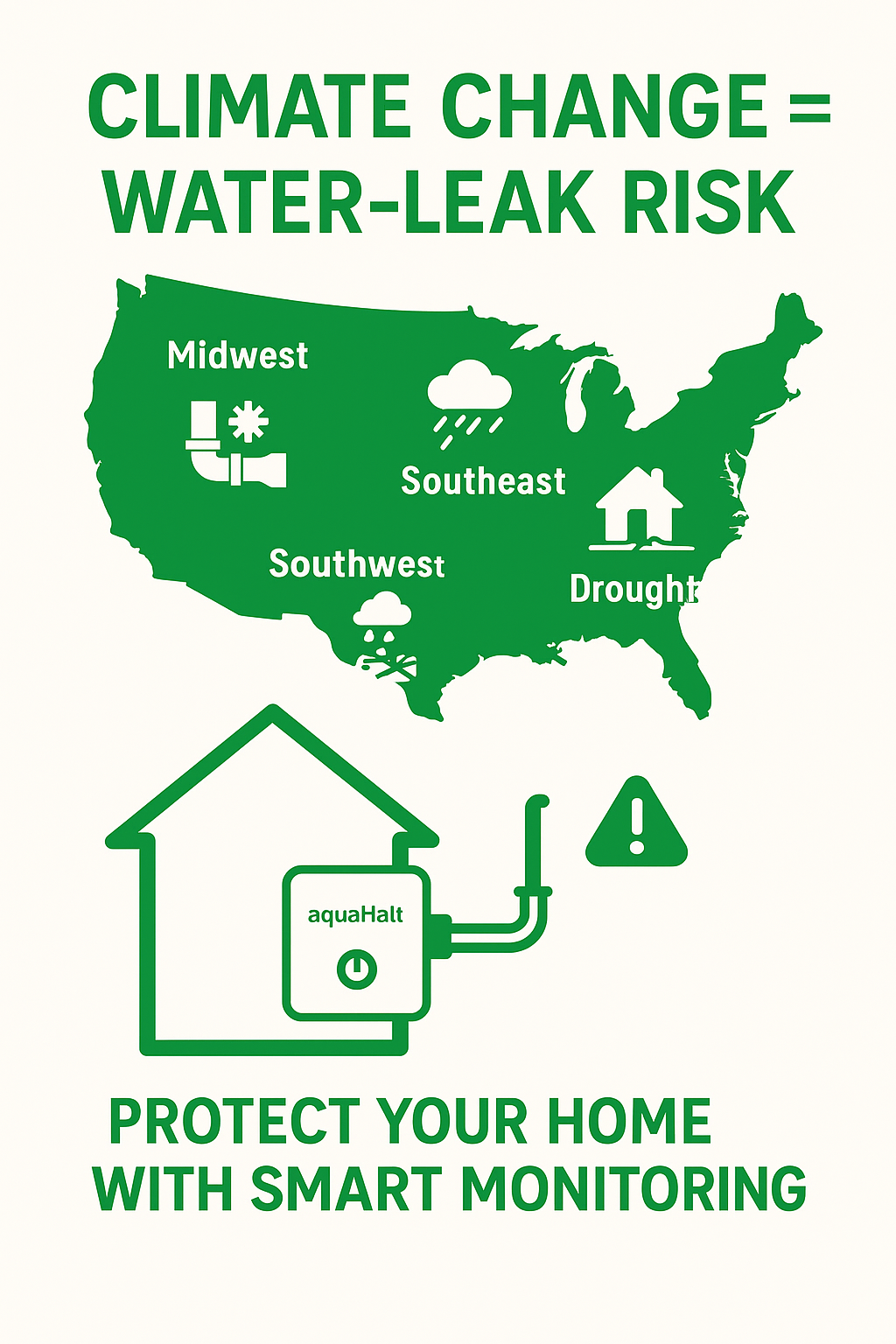
What’s happening: Climate change is increasing water-leak risk in US homes by altering weather patterns: more freeze-thaw cycles, heavier rainstorms, and shifting soil conditions are straining home plumbing systems like never before.
As climate shifts intensify across the United States, the risks of water damage in homes are rising sharply. Homeowners are seeing more frequent and severe plumbing failures tied to unpredictable weather, and most don’t realize that these leaks are directly connected to climate-driven factors.
Increased freeze-thaw cycles, heavier rainfall, and even alternating drought and flooding events are putting new stress on residential plumbing systems. These subtle yet powerful changes can silently destroy property foundations, flood basements, and cause thousands in damage before the issue is even detected.
In the Midwest, climate change has increased temperature volatility. According to NOAA, freeze-thaw frequency has risen by 12% over the past decade. This means pipes are freezing and thawing more often: expanding, contracting, and eventually bursting.
Once a pipe bursts inside a wall or under a crawl space, homeowners may not notice until significant water loss has already occurred. aquaHalt’s automatic shut-off system won’t catch a burst like that. It guards a single fixture: if water from a toilet, sink, or ice maker line runs onto the floor and touches its sensor, it closes that fixture’s supply.
Quick Tip: Insulate pipes in unheated basements, attics, and exterior walls before winter. Even a simple insulation sleeve can reduce the chance of freezing by 85%.
In the Southeast, the challenge is flooding, not freezing. Climate change has brought heavier, more concentrated storms. FEMA data shows that the region’s annual stormwater incidents have risen by nearly 20% since 2015.
This deluge increases groundwater pressure around homes, leading to foundation cracks and sump pump overloads. Once water infiltrates the foundation, it can weaken concrete and trigger long-term mold and structural issues.
Installing smart leak sensors near sump pumps and basement perimeters gives early warnings before leaks become full-blown floods.
In the Southwest, the water problem flips. Prolonged drought causes the soil to dry out and contract. Then flash floods suddenly soak and expand it, putting extreme stress on underground plumbing and slab foundations.
These fluctuations can fracture older pipes or loosen fittings beneath concrete. It’s a silent destroyer: leaks may continue for weeks before showing signs like rising water bills or damp patches on flooring.
According to the EPA (2023), nearly 80% of household water leaks occur in hidden or underground lines. Unlike visible drips, these leaks go unnoticed and cause:
Foundation erosion
Mold growth
Rising humidity
Insurance premium hikes
Once water seeps into walls or slabs, repair costs skyrocket. A hidden pipe leak can cause $10,000+ in restoration expenses, while a smart monitoring system costs a fraction of that.
Region | Preventive Steps |
|---|---|
Midwest | Insulate pipes, seal crawl spaces, drain outdoor lines before winter. |
Southeast | Inspect gutters, test sump pumps, add basement humidity sensors. |
Southwest | Check slab plumbing annually, install leak sensors near appliances and radiant systems. |
These steps, combined with smart monitoring, can cut water damage risks by up to 60%.
The Insurance Information Institute (2024) reports that the average US water damage claim is $11,605. Compare that with the $250–$400 investment in a home leak-detection setup, and the math is simple: prevention pays for itself the first time it stops a leak.
Add 24/7 protection, and the value extends beyond dollars: it’s about safeguarding family, property, and future resale value.
Audit all vulnerable water lines, especially older or outdoor systems.
Install smart sensors in high-risk areas like basements, slab floors, and laundry rooms.
Schedule seasonal inspections (spring and fall) to test for freeze or flood readiness.
Learn more about aquaHalt and how it shuts off one fixture’s water on its own.
Climate change isn’t slowing down, and neither should your home’s protection. From Midwest cold snaps to Southeast storms, the key to resilience lies in data, detection, and decisive action.
By putting an aquaHalt on each toilet, sink, and ice maker line, you’re adding a valve that closes by itself when a leak wets its sensor.